How to Use SMEDA's 10 Free Financial Calculators for Your Business in Pakistan
SMEDA offers 10 free calculators for break even, loan repayment, working capital and stock. No login needed. See how to use each one before you borrow or open.
Short answer: SMEDA runs a financial tools site with 10 free calculators, including break even, loan repayment, working capital, income tax and inventory analysis. You can use them without an account. Register only if you want to save your work. Use your own real prices in each tool, not the sample numbers.
Ask a shop owner whether the business makes money and you often get a shrug. Cash comes in and goes out every day, so the answer feels fuzzy. A calculator turns the fuzz into a number you can act on.
We opened the Small and Medium Enterprises Development Authority's financial tools site on 13 October 2026 and read the list of tools and the access rules. We did not enter real business data, so the screens may look different from our description.
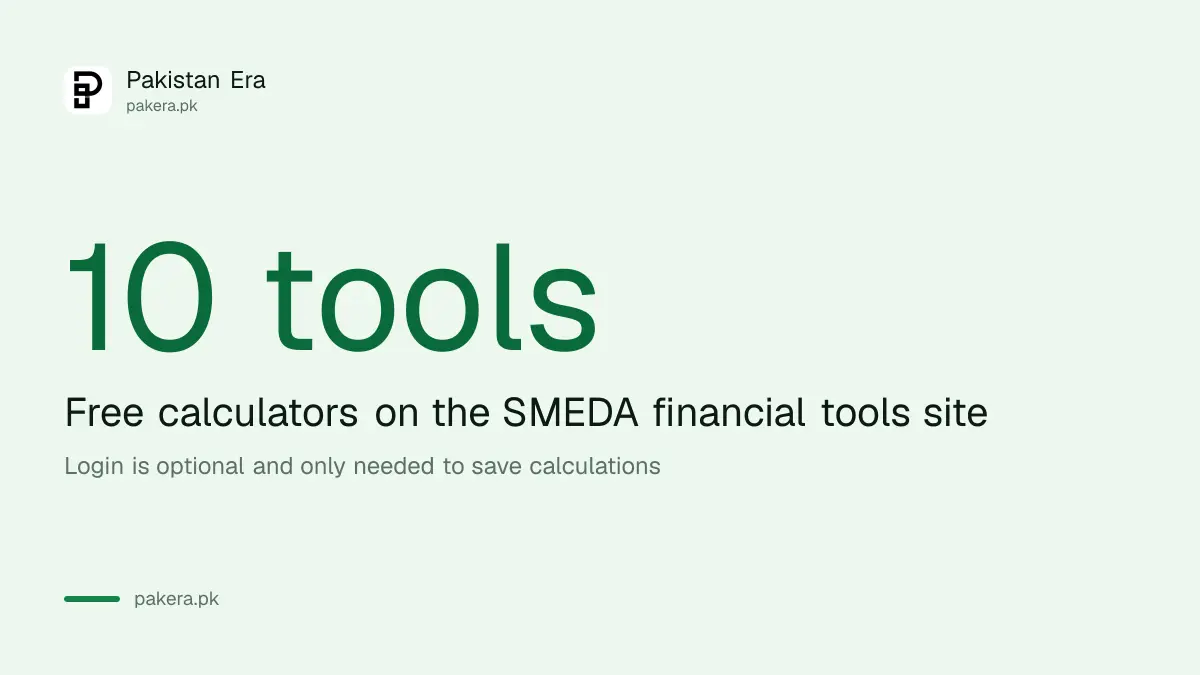
The site offers ten tools and needs no login
SMEDA says all the calculators on its financial tools platform are freely accessible. Login is optional. You can use the tools without an account, and registering only lets you save your calculations for later.
| Tool | What it helps you work out |
|---|---|
| Basic Financial Model | Complete financial statements for a business |
| Depreciation and Amortization | How much value an asset loses over time |
| Working Capital Calculator | Whether you have enough cash for daily running |
| Initial Capital Financing Calculator | How much money you need to start |
| Loan Repayment | Payments and interest on a loan |
| Income Tax Calculator | An estimate of tax owed |
| Financial Ratios Calculators | Key performance indicators |
| Breakeven Analysis Tool | The sales level where you stop losing money |
| Receivable Ageing Analysis Tool | Which customers have overdue payments |
| Inventory Analysis Tools | How well your stock is controlled |
Start with the break even tool
Break even is the number of sales at which income equals cost. Below it you lose money. Above it you earn a profit. Every new owner should know this number before opening.
Here is a simple example, with our own numbers and not SMEDA's. A small shop pays Rs 80,000 a month in rent, power and wages. It sells an item for Rs 500 that costs Rs 300 to buy. Each sale leaves Rs 200. The shop must sell 400 items a month, which is Rs 80,000 divided by Rs 200, just to cover costs.
If you expect to sell 250 items, the plan fails on paper. Better to learn that now than after signing a lease. Put your own costs into the tool and see what it says.
Use loan repayment before you borrow
The loan repayment tool estimates payments and interest. Before you take a loan, ask the bank for the rate, the number of months and any fees in writing. Then enter them and see the monthly instalment.
The test is simple. Can your break even profit pay the instalment and still leave money to live on? If not, borrow less or wait. The page on what banks charge and pay in Pakistan helps you compare a quote with market rates. And before you use a phone loan app, read how much a JazzCash ReadyCash loan costs per week.
Be careful with informal loans too. A weekly rate that sounds small can add up fast.
Check working capital every month
Working capital is the cash you have for daily bills after counting what customers owe you and what you owe suppliers. A business can be profitable on paper and still run out of cash, if customers pay late.
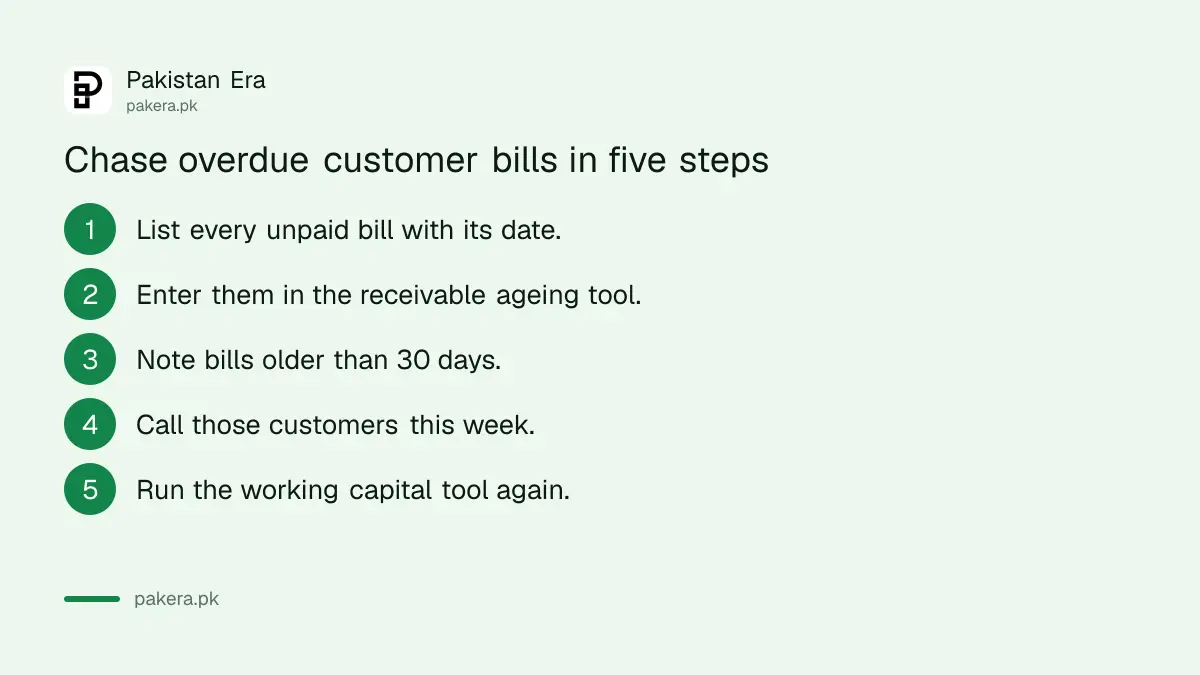
The working capital tool and the receivable ageing tool help here. Receivable ageing sorts unpaid customer bills by how old they are, so you see who to call first.
- List every unpaid customer bill with its date.
- Enter the amounts in the receivable ageing tool.
- Note the bills older than 30 days.
- Call those customers this week.
- Re-run the working capital tool and compare.
Keep the lists in one folder so you can compare month to month.
Treat the tax calculator as an estimate
SMEDA lists an Income Tax Calculator. Tax rules change with each budget, and we did not test whether the tool uses the current rates. So treat its result as a rough guide and confirm with FBR or a tax adviser.
For the real filing steps, read about filing under FBR's small shopkeeper scheme if you run a small shop. A freelancer can start with how a freelancer files an income tax return.
The same caution applies to the depreciation and ratios tools. They follow standard methods, but your accountant may use different choices for tax.
Combine the tools with a plan
The calculators work best after you have a cost list. SMEDA's pre-feasibility studies give a model list of machinery, space and staff. See how to use a SMEDA pre-feasibility study, then replace its costs with your own quotes and run the numbers here.
Save your results with a date. When prices rise, you can run the tool again and see how much your break even moved.
Common questions
Are SMEDA financial calculators free?
Yes. SMEDA says all calculators on its financial tools platform are freely accessible.
Do I need to log in to use them?
No. Login is optional and only lets you save your calculations.
How many tools are there?
The site lists 10, from a basic financial model to inventory analysis.
What does the break even tool tell me?
It shows the sales level at which your income equals your costs.
Can I trust the income tax calculator?
Use it as a rough estimate. Confirm the current rates with FBR or a tax adviser.
Will the tools plan my loan for me?
They estimate payments and interest from the numbers you enter. The bank's written offer is what binds you.
How we verified this
What we checked, where we read it, and what we could not confirm.
Last checked on 13 October 2026, Pakistan time. We read the SMEDA financial tools site for the list of calculators and the login rule. We did not enter data or test the calculations, and we did not check whether the tax tool uses current rates. The break even example uses our own numbers.
About the author

Global Affairs & Political Economy Writer
Muhammad Hatim is a book lover who started writing because he enjoys it. At Pakistan Era he writes about international relations, geopolitics and the global economy, with a particular interest in South Asia and the forces behind current events.