How to Apply for the SMEDA SMERP Grant: 70% Matching Support for Certification in Pakistan
Apply for the SMEDA SMERP grant in Pakistan: 70% matching support for certification cost up to Rs 800,000 and consultancy up to Rs 200,000. See who can join.
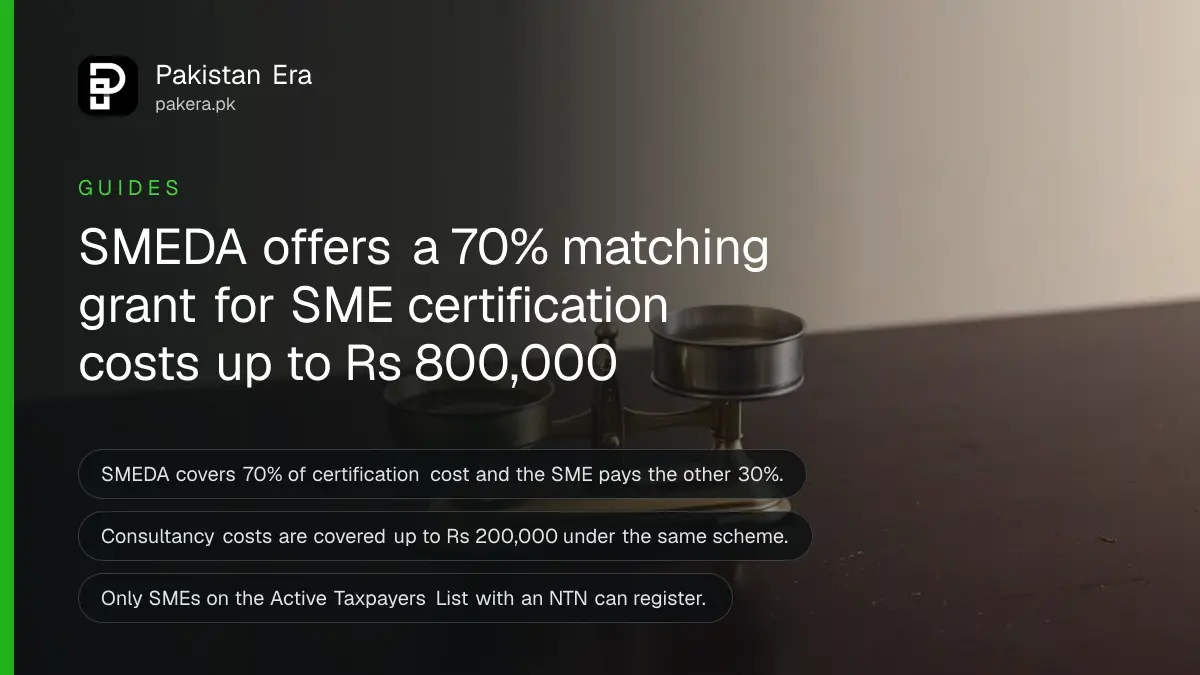
Short answer: SMEDA's SME Registration Portal (SMERP) offers a 70% matching grant for certification costs up to Rs 800,000, plus related consultancy costs up to Rs 200,000. The business pays the other 30%. You apply at smerp.smeda.org, and you need an NTN on the Active Taxpayers List.
A small factory or food business often needs an ISO or similar certificate before a big buyer will sign. The audit and the consultant can cost more than the business earns in a month. SMEDA, the Small and Medium Enterprises Development Authority, runs a grant to share that cost. This guide explains who can apply, what the grant pays and what to do first.
We read SMEDA's SMERP page and its homepage on 14 October 2026. We did not open an account or submit an application, so we cannot tell you how long approval takes.
What the SMERP grant pays for
SMEDA's page says the grant is a 70% matching grant. The business pays 30%. It covers certification cost up to Rs 800,000 and related consultancy cost up to Rs 200,000. The certificate must come from a body accredited by PNAC or a recognised foreign accreditation body.
PNAC is the Pakistan National Accreditation Council. It accredits the auditors who issue certificates. A certificate from an unaccredited body would not meet the rule on the page, so ask any auditor for proof of accreditation before you pay a deposit.
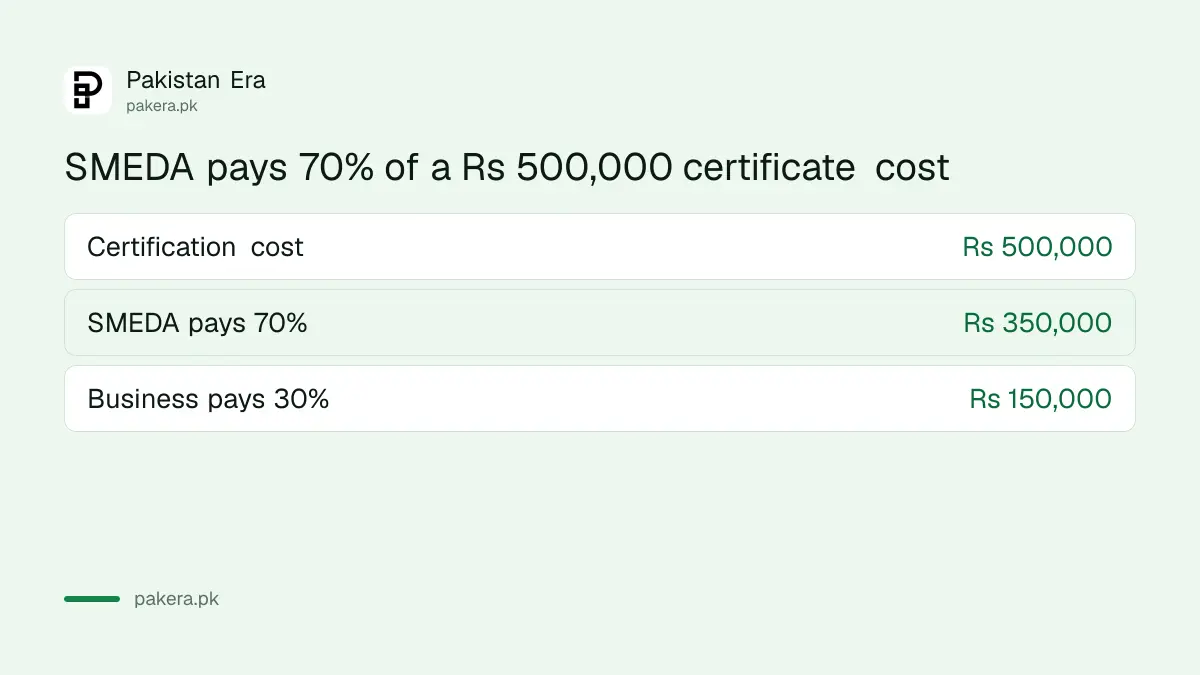
The page does not say whether the Rs 800,000 limit is the most the grant can pay or the most certification cost that can be counted. Ask SMEDA which one applies before you plan your budget. The example above uses a Rs 500,000 cost, which is under the limit either way.
Who can register on SMERP
SMEDA lists four conditions. The business needs an NTN on the Active Taxpayers List. Annual sales must be up to Rs 800 million, the National SME Policy 2021 definition. The business must have operated for at least five years. The applicant must own part of it.
| Condition on SMEDA's page | What to check |
|---|---|
| NTN on the Active Taxpayers List | Search your NTN on the FBR list before you start |
| Annual sales up to Rs 800 million | Use last year's sales figure from your return |
| At least five years in operation | Keep your first registration or tax papers ready |
| Applicant owns a stake in the business | Partnership deed or company records show your share |
| Active business bank account | Account must be in the business name |
The first condition catches many small firms. FBR updates the list on set dates, and a late filer can drop off it. Read how the Active Taxpayers List updates after the 15 October deadline and confirm you are on it.
How to apply step by step
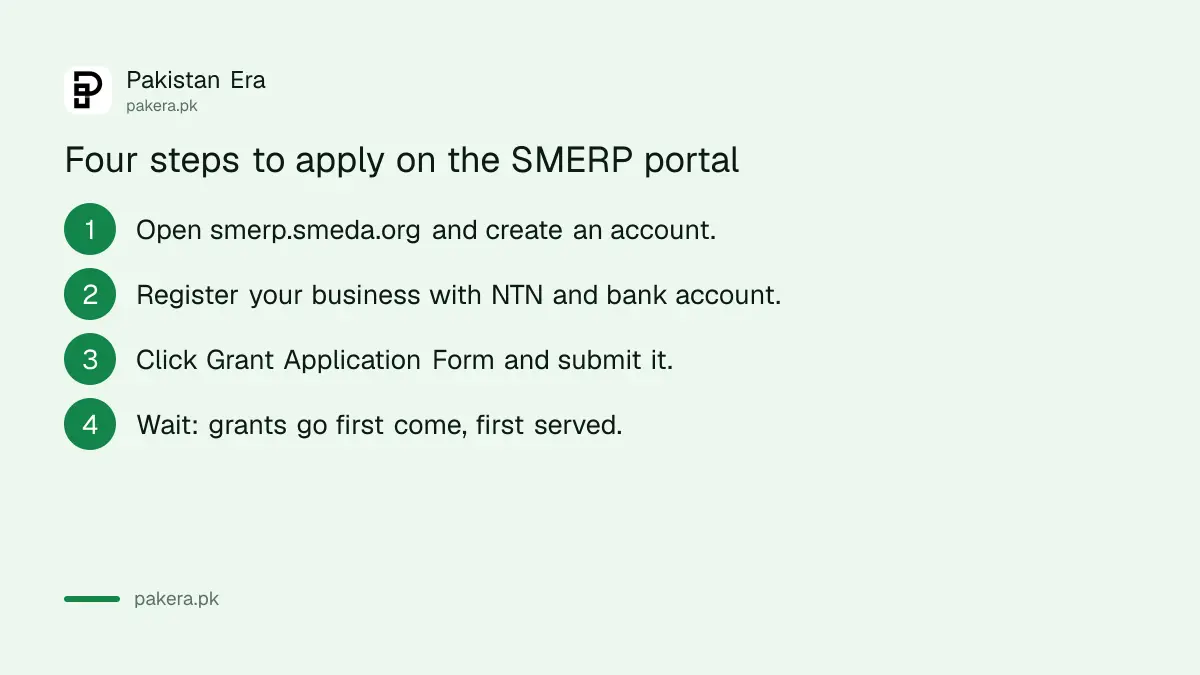
New users create an account at smerp.smeda.org, register the business, then click the Grant Application Form link and submit it. SMEDA says applications are handled on a first come, first served basis, so a complete form sent early is better than a perfect one sent late.
- Open smerp.smeda.org and create a new account with an email you check daily.
- Register your business. SMEDA says you need an active business bank account, a valid NTN and a registration number.
- Click the Grant Application Form link inside the portal.
- Fill in the certification you want, the accredited body and the cost.
- Submit the form and save a copy of the confirmation.
SMEDA's page lists no closing date. We could not tell whether funds are open today, so write to SMEDA before you sign a contract with an auditor. If you pay first and the grant is not approved, the full cost stays with you. For help with the bank account, see how to open a business bank account in Pakistan.
Plan the cost before you submit
Get written quotes from at least two accredited bodies and one consultant. Work out the 30% your business must pay. If that share is too high, the grant will not help. SMEDA's free tools can check your numbers first.
Use the SMEDA financial calculators to test whether the certificate pays for itself through new orders. If you are still deciding whether to start a business at all, the SMEDA pre-feasibility studies come first, because the grant needs five years of operation.
Keep the invoices and the accreditation proof together. A grant that matches cost will need proof of what you spent. The page does not describe the payment steps, so ask SMEDA whether it pays you after the certificate or pays the auditor directly.
Where to get help from SMEDA
SMEDA's head office is at Office 007, Ground Floor, Evacuee Trust Complex, Agha Khan Road, F-5/1, Islamabad. The page gives the phone numbers (051) 9205711 and 9205714. The homepage also lists a consultant database and banking tools for small firms.
If you need a consultant for the certification work, our guide to the SMEDA consultant database shows how to search it. SMEDA does not endorse any consultant on that list, so check each one yourself.
Common questions
How much does the SMERP grant cover?
SMEDA's page says 70% of certification cost up to Rs 800,000 and related consultancy cost up to Rs 200,000. The business pays 30%.
Can a new business apply?
The page lists a minimum of five years in operation. A business younger than that does not meet the condition as written.
Do I need an NTN?
Yes. The NTN must be on the Active Taxpayers List. A business bank account is also needed.
Is there a deadline?
SMEDA's page gives no deadline. It says applications are handled first come, first served, so apply early.
Which certificates qualify?
The page says the body must be accredited by PNAC or a recognised foreign accreditation body. It does not list certificate names.
How we verified this
What we checked, where we read it, and what we could not confirm.
Last checked on 14 October 2026, Pakistan time. We read the SMERP page at smeda.org and the SMEDA homepage. We did not create an account, so the form fields, approval time and payment method are not verified. Confirm current funding with SMEDA on (051) 9205711 before you commit money.
About the author

Tax, Bills and Technology Writer
Ali Akhtar is a young and curious voice here at Pakistan Era. He is currently pursuing his A-Levels and has a growing interest in Pakistan’s changing industrial landscape and educational trends. Ali likes to write in a way that helps him explain and explore the world around him. His writing reflects the perspective of the new generation navigating the evolving trends of Pakistan where technology, youth innovation, and shifting opportunities are reshaping the country’s future.