Check Why Pakistan Pays for Idle Power Plants: Peak Demand 24,699 MW Against 33,281 MW
NEPRA says peak demand was 24,699 MW against 33,281 MW of capacity in 2024-25 and thermal plants ran at 38%. Check what that means for your bill and your cuts.
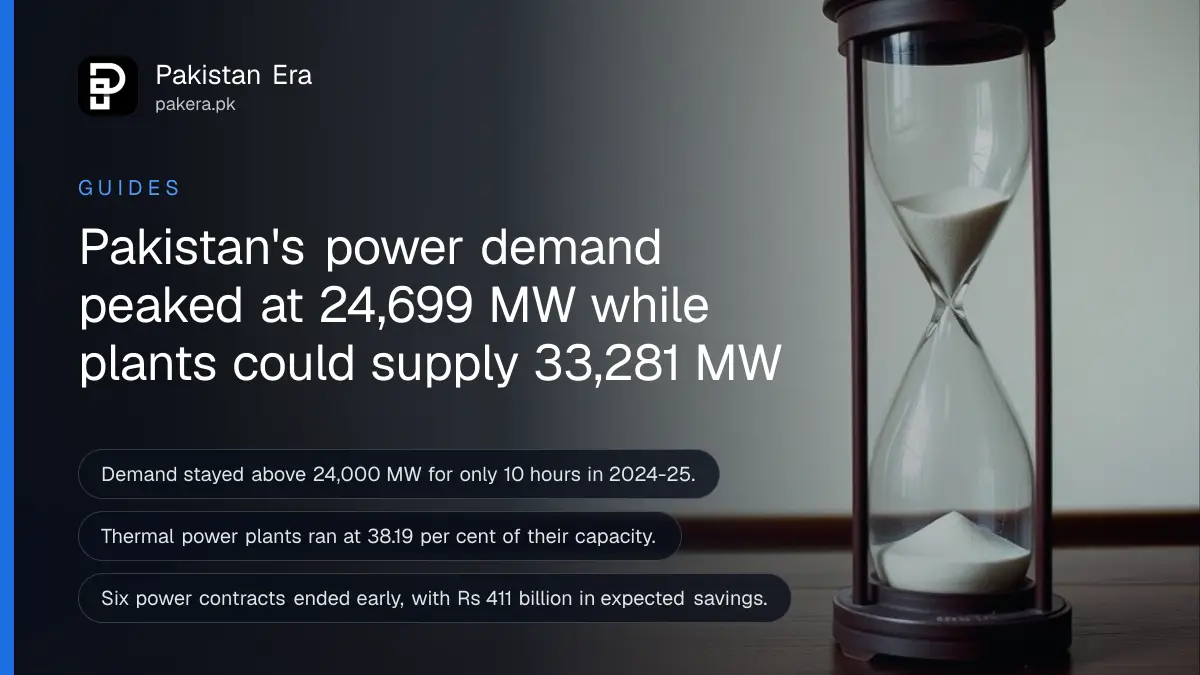
Short answer: NEPRA's report for 2024-25 says Pakistan's peak electricity demand was 24,699 MW, while its plants could dependably supply 33,281 MW. Demand stayed above 24,000 MW for just 10 hours in the whole year. Thermal plants ran at 38.19 per cent of capacity, and consumers pay fixed fees on the rest.
Load shedding and idle power plants sit side by side in Pakistan. That looks odd. The 2024-25 numbers from the regulator show how both can be true, and why part of your bill goes to plants that were not running.
We downloaded NEPRA's State of the Industry Report 2025 from nepra.org.pk on 14 October 2026 and read its chapters on the power sector and generation. It covers the year to June 2025. It shows no publication date, and it is not about this month's cuts.
Peak demand was 24,699 MW against 33,281 MW of dependable capacity
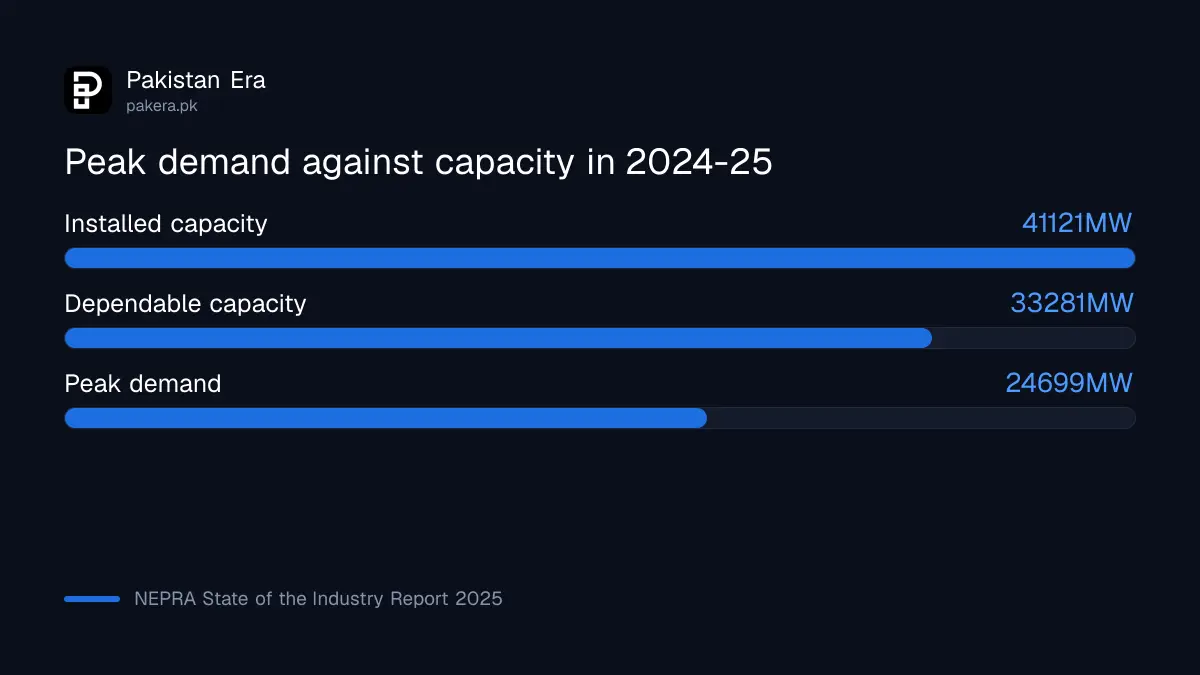
The system peak was 24,699 MW, reached at midnight on 20 June 2025 and lasting one hour. Dependable capacity at that time was 33,281 MW. That is a use rate of 74 per cent at the busiest moment of the year. At the quietest moment, on 31 March 2025, it was 18 per cent.
Dependable capacity is the power plants can reliably give, not the figure on a plant's nameplate. Total installed capacity was 41,121 MW on 30 June 2025, including K-Electric. The difference between 41,121 and 33,281 is our own sum of 7,840 MW, which is the gap between what is installed and what NEPRA counts as dependable.
Demand stayed above 24,000 MW for only 10 hours
NEPRA gives the load duration for the year. Demand above 24,000 MW lasted 10 hours. Between 23,000 and 24,000 MW it lasted 70 hours. The grid carried more than 20,000 MW for only 1,147 hours, which is our own sum, out of 8,760 hours in a year.
| Demand range | Hours in 2024-25 |
|---|---|
| 24,000 to 24,699 MW | 10 |
| 23,000 to 24,000 MW | 70 |
| 22,000 to 23,000 MW | 200 |
| 21,000 to 22,000 MW | 362 |
| 20,000 to 21,000 MW | 505 |
NEPRA asks a plain question about this. Should Pakistan keep paying for "take or pay" plants to meet a few hours of peak demand? It suggests other options, such as managing demand and holding smaller reserves in quiet hours. That is the regulator's opinion, not a decision.
Thermal plants ran at 38.19 per cent of capacity
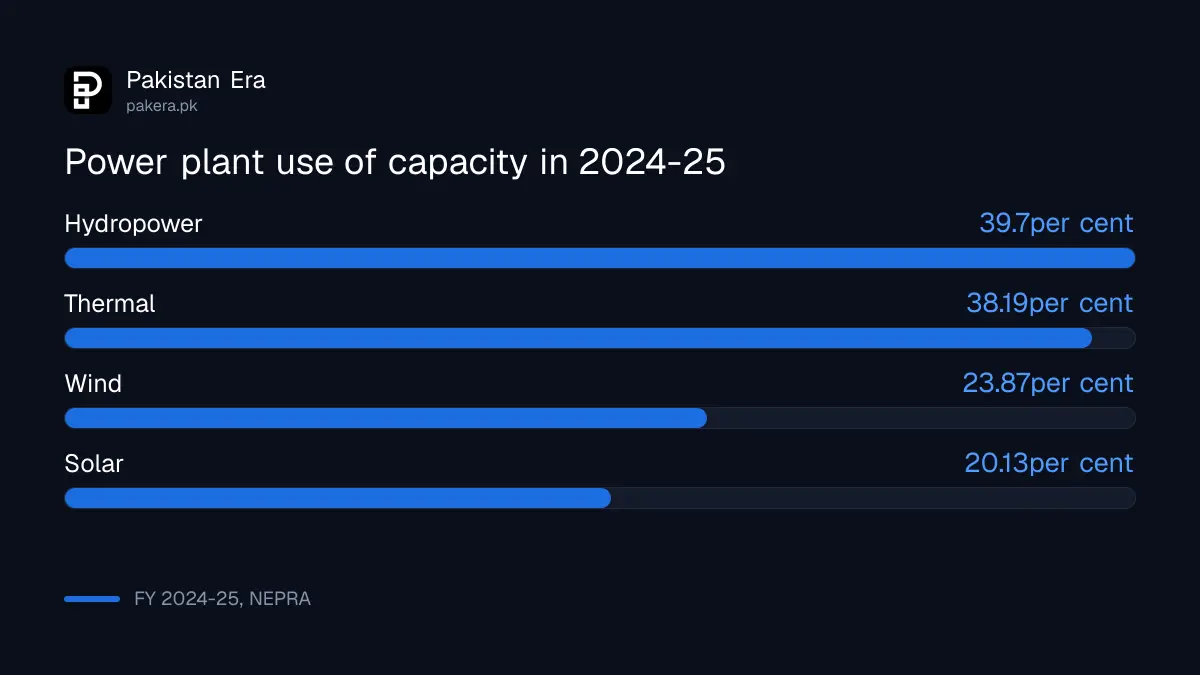
Thermal plants burn gas, coal, oil or uranium. In 2024-25 their average use was 38.19 per cent. Installed thermal capacity was 26,754 MW at June 2025, with 24,189 MW dependable. A year earlier the figures were 32,386 MW and 26,261 MW.
Renewable plants also ran below capacity because water, wind and sun vary. NEPRA gives use rates of 39.70 per cent for hydropower, 23.87 for wind and 20.13 for solar. The fixed fee on each plant is paid at those low rates of use, which is why the cost per unit rises. We explain the fee in what a unit of electricity costs in fuel and capacity.
Six power contracts ended early, with Rs 411 billion in expected savings
The report says six independent power producers had their contracts ended by agreement before they expired. They are Hub Power (1,292 MW), Atlas (224 MW), Lalpir (362 MW), PakGen (365 MW), Saba (136 MW) and Rousch (450 MW). Together that is about 2,829 MW, which we confirmed by adding the six.
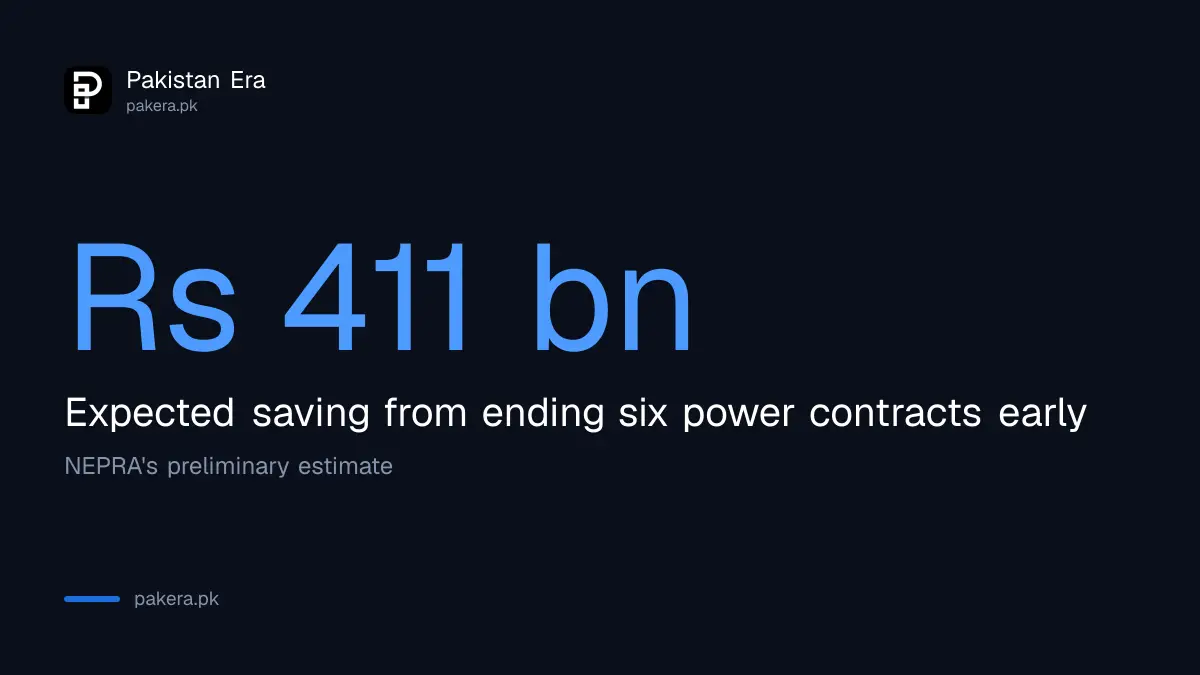
NEPRA says early termination should save about Rs 411 billion over the remaining contract periods. It puts the yearly relief for consumers at around Rs 60 billion, mainly through lower tariffs and less circular debt. These are preliminary estimates from the report, and we have not checked them. The wider debt picture is in our report on Pakistan's Rs 3.38 trillion circular debt.
Spare capacity does not mean you will not face cuts
Capacity on paper is not power at your feeder. Power plants can be offline, fuel can be short, and lines can be too weak for the load. Early in October 2026 a shortfall of more than 4,000 MW was reported, which we cover in the reported October shortfall. We could not find an official statement on it, so we cannot say how it fits these figures.
- Note the date, start time and end time of every cut for two weeks.
- Compare your log with your company's schedule and with the NEPRA rules on load shedding.
- Complain to your power company first, then to NEPRA, with your log attached.
- See whether your company's reports match what NEPRA monitored in reported and monitored load-shedding hours.
Common questions
What was Pakistan's peak electricity demand in 2024-25?
It was 24,699 MW, reached at midnight on 20 June 2025. NEPRA says it lasted one hour, and demand stayed above 24,000 MW for 10 hours in the year.
How much electricity capacity does Pakistan have?
Installed capacity was 41,121 MW on 30 June 2025, including K-Electric. Dependable capacity at the time of peak demand was 33,281 MW.
Why do we pay for power plants that do not run?
Many were signed on take or pay terms, so the buyer owes a fixed fee even when it takes no power. NEPRA says thermal plants ran at 38.19 per cent of capacity.
Which power contracts were ended early?
Six, with about 2,829 MW: Hub Power, Atlas, Lalpir, PakGen, Saba and Rousch. NEPRA expects savings of about Rs 411 billion over the remaining years.
Does spare capacity mean no load shedding?
No. Cuts depend on plant availability, fuel, wires and feeders, not on capacity alone. Keep a log and complain if cuts exceed your schedule.
How we verified this
What we checked, where we read it, and what we could not confirm.
Last checked on 14 October 2026. We read NEPRA's State of the Industry Report 2025, sections 2.1 and 3.2 to 3.4, from the PDF on nepra.org.pk. The 7,840 MW gap and the 1,147 hour total are our own sums. We did not read the power purchase contracts, and we did not check the savings estimates or any current outage data.
About the author

Global Affairs & Political Economy Writer
Muhammad Hatim is a book lover who started writing because he enjoys it. At Pakistan Era he writes about international relations, geopolitics and the global economy, with a particular interest in South Asia and the forces behind current events.