Make Drinking Water Safe at Home in Pakistan: NIH's Boiling, Chlorine and Testing Steps
NIH's brochure says to boil water for 1 minute, or use chlorine tablets and wait 30 to 40 minutes. See the steps, tank care and how to send a sample to its lab.
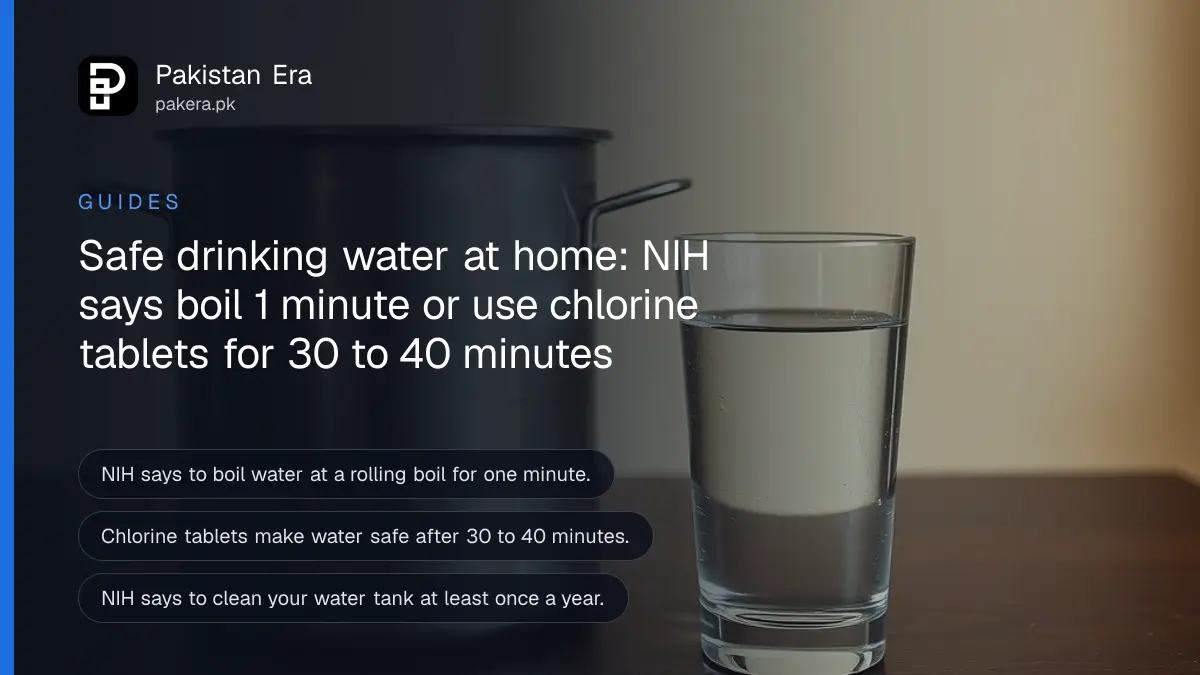
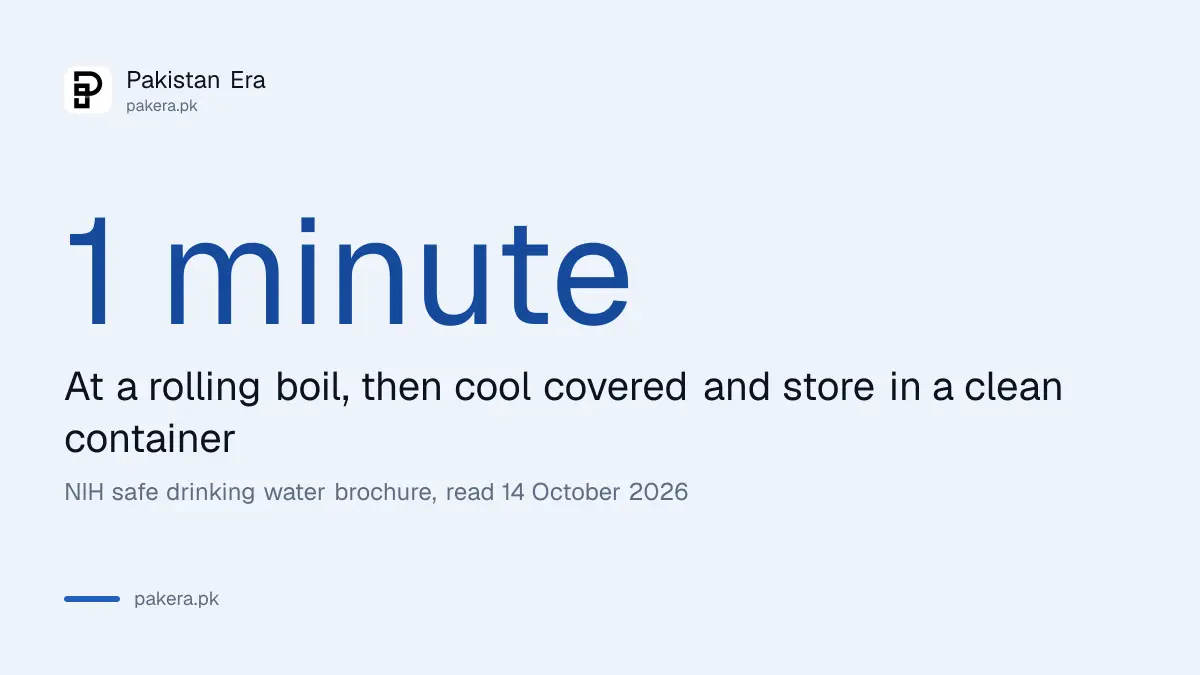
NIH's drinking water brochure says boiling is the most reliable way to make water safe: bring it to a rolling boil, keep it boiling for one minute, cool it covered and store it in a clean closed container. If you cannot boil, it lists chlorine tablets, used as the maker directs, with a wait of 30 to 40 minutes.
We read NIH's Urdu brochure on safe drinking water on 14 October 2026. It was produced by the Epidemic Investigation Cell of the NIH Public Health Laboratories Division with the World Health Organization (WHO), and it has no date. We translated the points below. We left out any dose we could not read with certainty.
Boiling is NIH's first choice, and one minute is the key
NIH says boiling kills the germs that make water unsafe, and it calls it the most dependable method. Use a clean steel or similar vessel. When the water is bubbling hard, let it boil for one minute, then cool it with a lid on.
The brochure adds two cautions. Do not pour boiled water through a cloth, because that can bring dirt back in. And once the water has cooled, keep it in a clean container with a cover, then use it as needed.
Chlorine tablets work when you cannot boil
NIH says to use chlorine tablets from the market as the manufacturer directs. It says the water becomes safe to drink 30 to 40 minutes after the tablet goes in. The brochure also says to keep the tablets away from children and not to eat them.
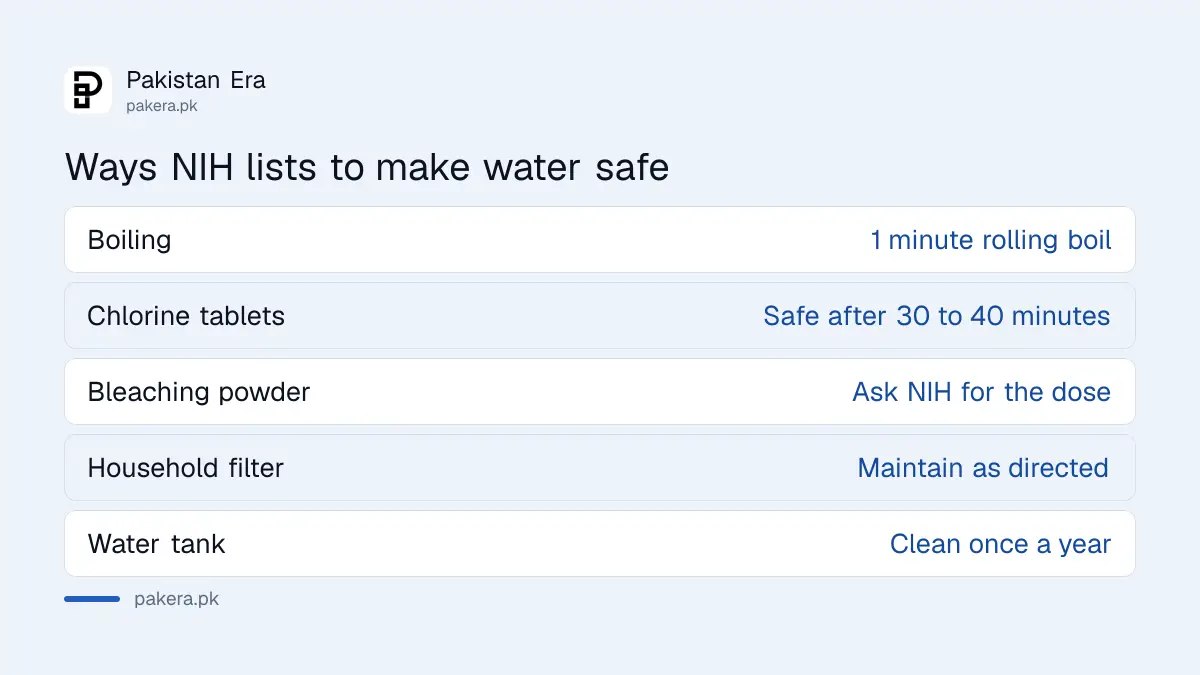
| Method | What NIH's brochure says |
|---|---|
| Boiling | Rolling boil for 1 minute, cool covered, store in a clean closed container |
| Chlorine tablets | Follow the maker's directions, safe after 30 to 40 minutes |
| Bleaching powder | A stock solution method is given, ask NIH for the dose |
| Household filter | A trusted method if cleaned and changed as directed |
| Storage | Clean, covered containers, taken out with a clean long-handled ladle |
The brochure also describes a bleaching powder method. We do not repeat the amounts. Our reading of the printed numbers is not certain, and a wrong chlorine dose is unsafe. Call the NIH numbers at the end of this page to get the dose in writing.
Dirty water carries diarrhoea, typhoid and hepatitis
NIH's brochure lists the diseases that come with contaminated water. They are acute watery diarrhoea, dysentery, typhoid fever and hepatitis A and E. It names causes such as leaking pipes, sewage near water lines and poor drainage.
If someone has watery stools, start with ORS and read our steps for treating a child's diarrhoea. For yellow eyes and dark urine, see the signs of hepatitis A or E from contaminated water.
Keep storage clean and the tank cleaned once a year
NIH says to store drinking water in clean, covered containers and to take it out with a clean, long-handled ladle. It says to keep storage away from animals and humans. It also says to clean the home water tank at least once a year.
The brochure says a water tank should be built at least 150 feet from a sewage line. If a pipe leaks, repair it at once. A cracked pipe next to a drain is how clean water turns unsafe on its way to the tap.
Send a sample to NIH's lab if you doubt the water
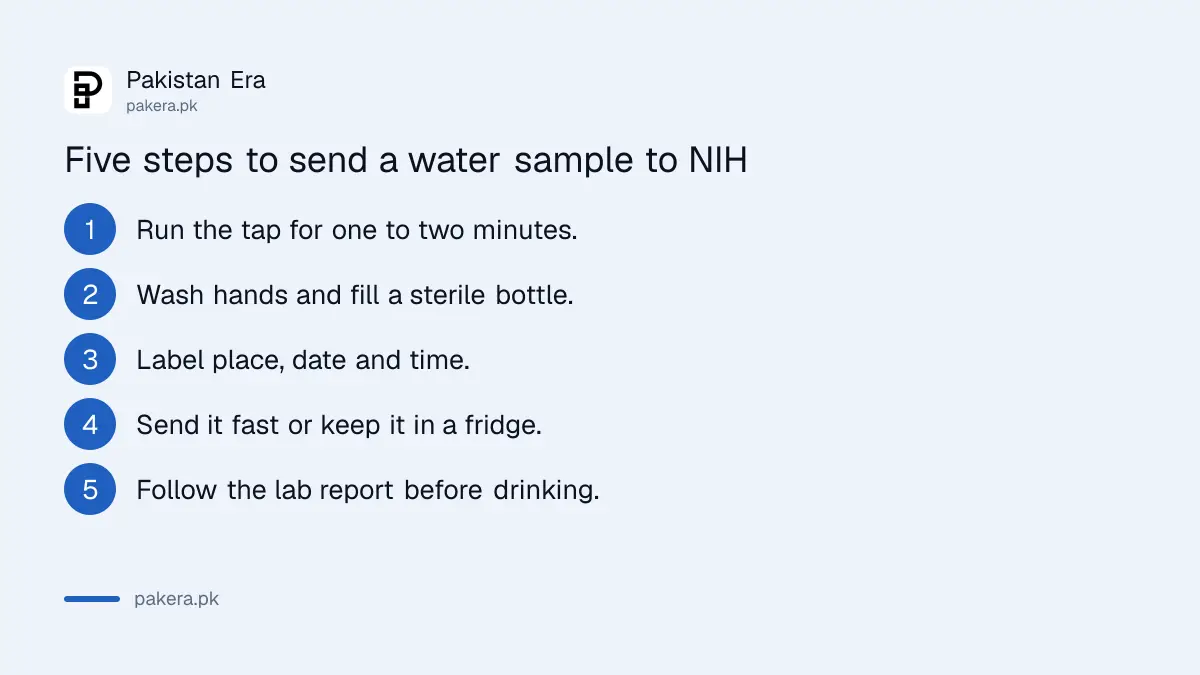
NIH says to test drinking water regularly. For a tap sample, let the water run for one to two minutes, clean the tap, wash your hands and fill a sterile bottle. Label it with place, date and time, and send it to the NIH lab in Islamabad quickly.
If you cannot reach the lab at once, NIH says to keep the bottle in a fridge and send it by courier. Then follow the lab's advice on the report. For a lab you can use in a different city, our guide to testing home water at a PCRWR lab lists prices.
- Run the tap for one to two minutes, then wash your hands.
- Fill a sterile bottle and close it carefully.
- Write the place, date and time on the label.
- Send it to the lab fast, or keep it in a fridge until then.
- Follow the lab report's advice before you drink the water.
Safe food habits go with safe water
NIH's brochure does not stop at water. It tells readers to wash their hands with soap before and after eating, and to avoid raw or stale vegetables and cut fruit sold on the roadside. It says flies and dirt gather on cut food, and germs reach the body that way.
It also says to wash eating utensils with clean water and to cover cooked food. These are small habits, but the brochure treats them as part of the same defence as boiling.
Common questions about safe drinking water
How long should I boil water?
NIH says to keep it at a rolling boil for one minute. Then cool it covered.
How long do chlorine tablets take to work?
NIH says 30 to 40 minutes after adding the tablet, used as the maker directs.
Is filtered water always safe?
NIH calls a household filter a trusted method, but only if you keep it maintained as directed.
How often should I clean my water tank?
NIH says at least once a year.
Where can I get the NIH lab numbers?
The brochure prints 051-9255237, 9255566 and 9255238, and the email eic.nih@gmail.com. It is an older brochure, so confirm the details before you rely on them.
How we verified this
What we checked, where we read it, and what we could not confirm.
Last checked 14 October 2026. All steps come from NIH's safe drinking water brochure, listed on the NIH health education page. It has no date, and we read it by eye in Urdu. We did not repeat the bleaching powder dose, and we did not test any method. This page is not medical advice.
About the author

Public Services and Education Journalist
Fajr Riaz is a journalist and content writer at Pakistan Era, based in Lahore. She covers the questions people meet in everyday life in Pakistan: how a public service works, what a change in the rules means, and where to find a reliable answer.