Spot Whooping Cough in a Baby in Pakistan: NIH's Stages, Treatment and Free Vaccine
NIH's pertussis advisory: three stages, antibiotics work best in the cold-like stage, and vaccine doses at 6, 10 and 14 weeks at EPI centres. Know the signs.
Short answer: Whooping cough, or pertussis, starts like a cold and then turns into bursts of rapid coughing that end in a high-pitched "whoop". NIH says antibiotics work best in the first, cold-like stage, and that free vaccine doses are given at 6, 10 and 14 weeks at EPI centres.
A baby with a runny nose and a mild cough does not alarm anyone. That is the problem with whooping cough: for the first week or two it looks like every other winter cold. By the time the coughing fits start, the window for the most useful treatment has mostly closed.
We read the National Institutes of Health (NIH) advisory on pertussis dated 9 January 2024 and the weekly bulletin for week 38 of 2026 on 12 October 2026. The bulletin reports that whooping cough cases rose that week, which is why this page matters now.
The cough passes through three stages
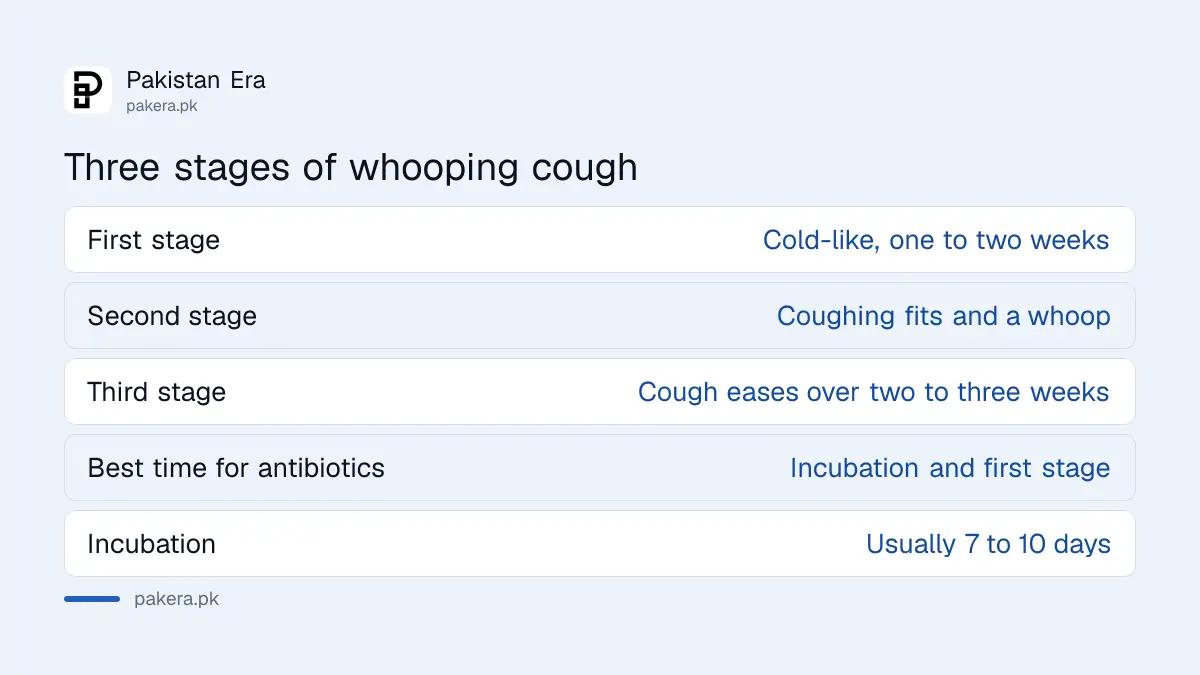
NIH divides pertussis into three stages: a cold-like stage, a stage of coughing fits, and a recovery stage. The cough can last for weeks. The middle stage is the one with the "whoop", and it is the stage where babies look very ill.
The first stage brings a runny nose, sneezing, low fever and a mild cough that slowly gets worse. The advisory says the second stage begins after one to two weeks. The patient has bursts of many rapid coughs, then a long breath in with a high-pitched whoop. The face may turn blue, and vomiting and exhaustion can follow.
The third stage is slow recovery. The cough eases over two to three weeks, but the advisory warns the fits can come back with later chest infections for months.
| Stage | When | What you see |
|---|---|---|
| First (catarrhal) | First 1 to 2 weeks | Runny nose, sneezing, mild fever, light cough |
| Second (paroxysmal) | After 1 to 2 weeks | Fits of rapid coughing, whoop, vomiting, blue face |
| Third (convalescent) | 2 to 3 weeks of easing | Cough fades, fits may return with new infections |
Very young babies are the ones to watch
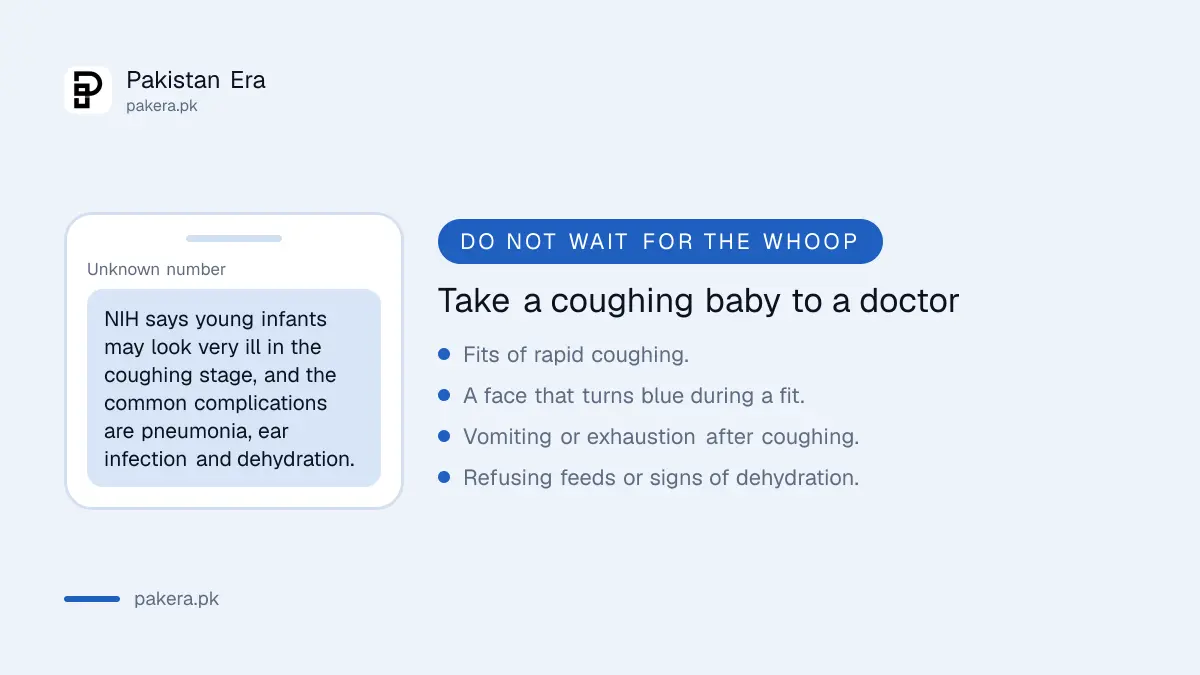
The NIH advisory says children and young infants may look very ill and distressed in the coughing stage. It lists pneumonia, ear infection, loss of appetite, dehydration, and in some cases seizures as the common complications. Take a baby with fits of coughing to a doctor the same day.
The advisory also says the disease is highly contagious, with more than 80 per cent of susceptible contacts catching it. The incubation period, the time between catching it and showing signs, is usually 7 to 10 days and can be 4 to 21 days. It spreads through coughs and sneezes at close range.
If your child is breathing fast or struggling, read how to check a child for pneumonia. A cough with fast breathing is a different problem and needs a different test.
Antibiotics work best early, so do not wait for the whoop
NIH says treatment is mostly supportive, but antibiotics may prevent or lessen the illness when given in the incubation period or the early cold-like stage. Later they do not change the course much, though they reduce spread. A doctor must prescribe them.
The advisory names azithromycin, clarithromycin and erythromycin, with trimethoprim-sulfamethoxazole as another option. Do not buy these on your own. The right drug and dose depend on the child's age and weight, and an old cough syrup will not help.
The advisory also says a person with suspected pertussis should avoid young children and women in late pregnancy, especially if unvaccinated, until at least five days of antibiotics are taken. Wash hands with soap and cough into the elbow.
The vaccine is free and given at 6, 10 and 14 weeks
NIH says whooping cough vaccine is part of routine immunisation, with three doses at the 6th, 10th and 14th week after birth at EPI centres across the country. Unvaccinated or part-vaccinated people should start or finish the series with DTaP, the advisory says.
EPI is the Expanded Programme on Immunisation, the government's free childhood vaccine service. The full list of doses by age is in the free EPI baby vaccination schedule. Take your child's vaccination card to the centre so staff can see which doses are missing.
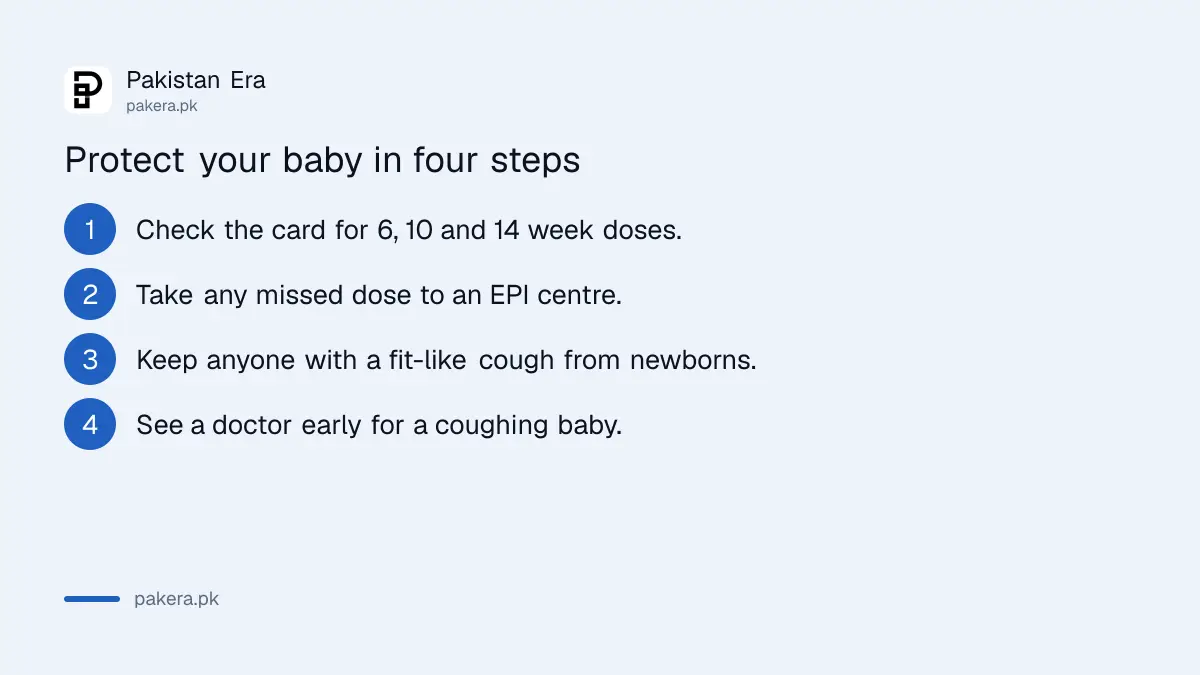
- Check your baby's vaccination card for the 6, 10 and 14 week doses.
- Take a missed dose to the nearest EPI centre as soon as you can.
- Keep anyone with a long, fit-like cough away from newborns.
- Take a coughing baby to a doctor early, not after the whoop.
The weekly bulletin shows cases going up
NIH's week 38 bulletin lists pertussis among the vaccine-preventable diseases that increased that week, with mumps, meningitis and diphtheria. These are suspected cases, and Punjab is marked as not reported. We cover the numbers in the week 38 case report.
The bulletin counts suspected cases only. It does not confirm them by laboratory test, so treat it as a signal and not a final count. See how to read the NIH weekly bulletin by district to find your own area.
Common questions
What are the first signs of whooping cough?
A runny nose, sneezing, a low fever and a mild cough that slowly gets worse. It looks like a common cold in the first one to two weeks.
How long does whooping cough last?
The cold-like stage lasts one to two weeks and the fits follow. Recovery takes two to three weeks, and fits may return for months with later chest infections.
Is the whooping cough vaccine free in Pakistan?
NIH says it is part of routine immunisation, given at 6, 10 and 14 weeks at EPI centres across the country. Check with your centre for current availability.
Can adults get whooping cough?
Yes. The advisory says suspected cases of any age should keep away from young children and women in late pregnancy until at least five days of antibiotics are taken.
Which antibiotics does NIH name?
Azithromycin, clarithromycin and erythromycin, and trimethoprim-sulfamethoxazole can also be used. Only a doctor should prescribe them, and early use matters most.
How we verified this
What we checked, where we read it, and what we could not confirm.
We read the NIH pertussis advisory of 9 January 2024 and the week 38 of 2026 bulletin on 12 October 2026. This page is general information and not medical advice. See a doctor for any child with a worsening cough.
About the author

Public Services and Education Journalist
Fajr Riaz is a journalist and content writer at Pakistan Era, based in Lahore. She covers the questions people meet in everyday life in Pakistan: how a public service works, what a change in the rules means, and where to find a reliable answer.