Use Antibiotics Safely in Pakistan: NIH's Six Rules to Stop Resistance
NIH's antibiotic poster lists 6 rules: no self-medication, finish the course, never reuse or share. See them with WHO figures and the steps to follow.
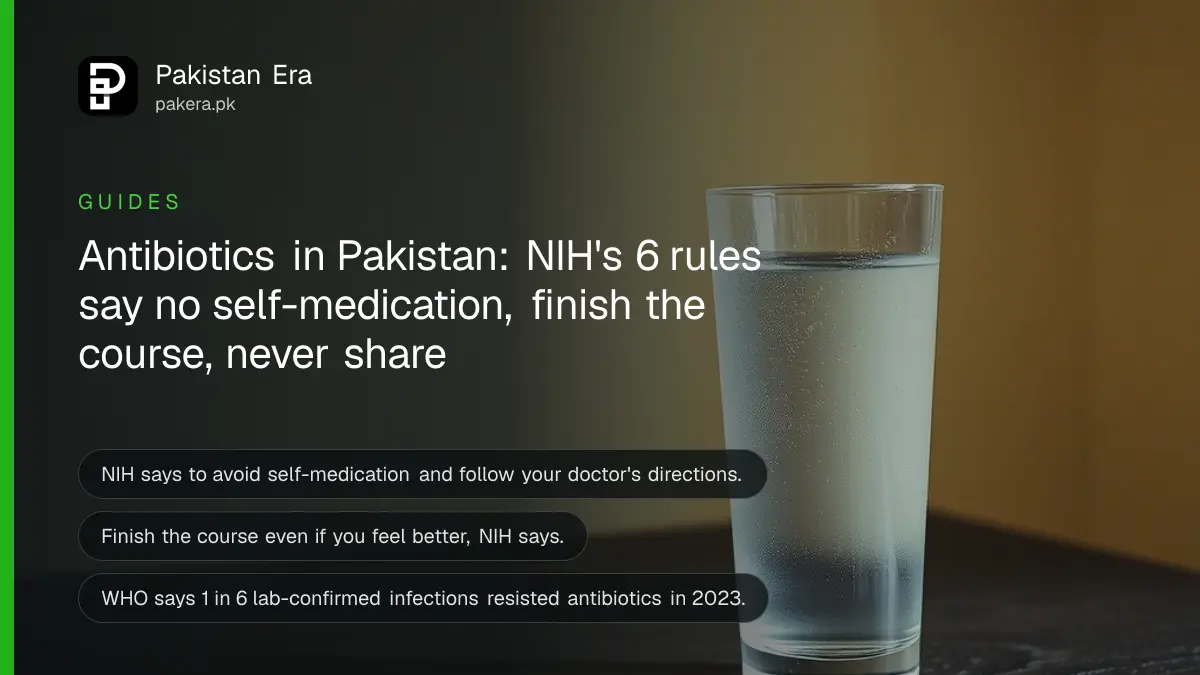
NIH's antibiotic poster gives six rules: do not self-medicate, take antibiotics only as your doctor says, finish the full course even if you feel better, never reuse leftovers, never share them, and wash your hands. The poster warns that needless use is a leading reason resistance is spreading. That is a risk to everyone.
We read the National Institutes of Health (NIH) antibiotic resistance poster, written in Urdu, on 14 October 2026. We also read NIH's antimicrobial resistance page and the World Health Organization (WHO) fact sheet. This page turns the poster into plain steps. It is not medical advice, and your doctor decides your treatment.
Antibiotic resistance means the medicine stops working on germs
NIH's poster says resistance happens when a medicine used against disease-causing germs, meaning bacteria, no longer works. It says people, animals and the environment are all being affected, and quickly. A resistant infection can be harder or impossible to treat.
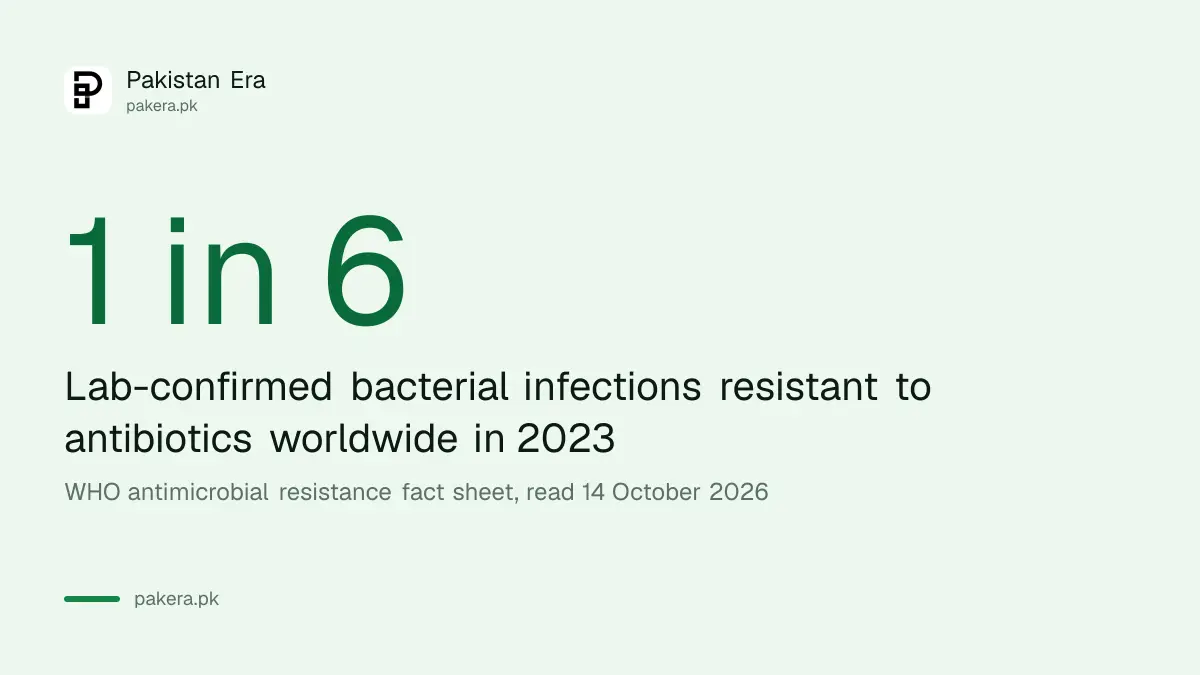
WHO's fact sheet puts numbers on it. It says bacterial resistance was linked to more than 4.7 million deaths worldwide in 2021. It also says about 1 in 6 lab-confirmed bacterial infections in 2023 was resistant to antibiotics.
NIH lists six rules, and the first is to skip self-medication
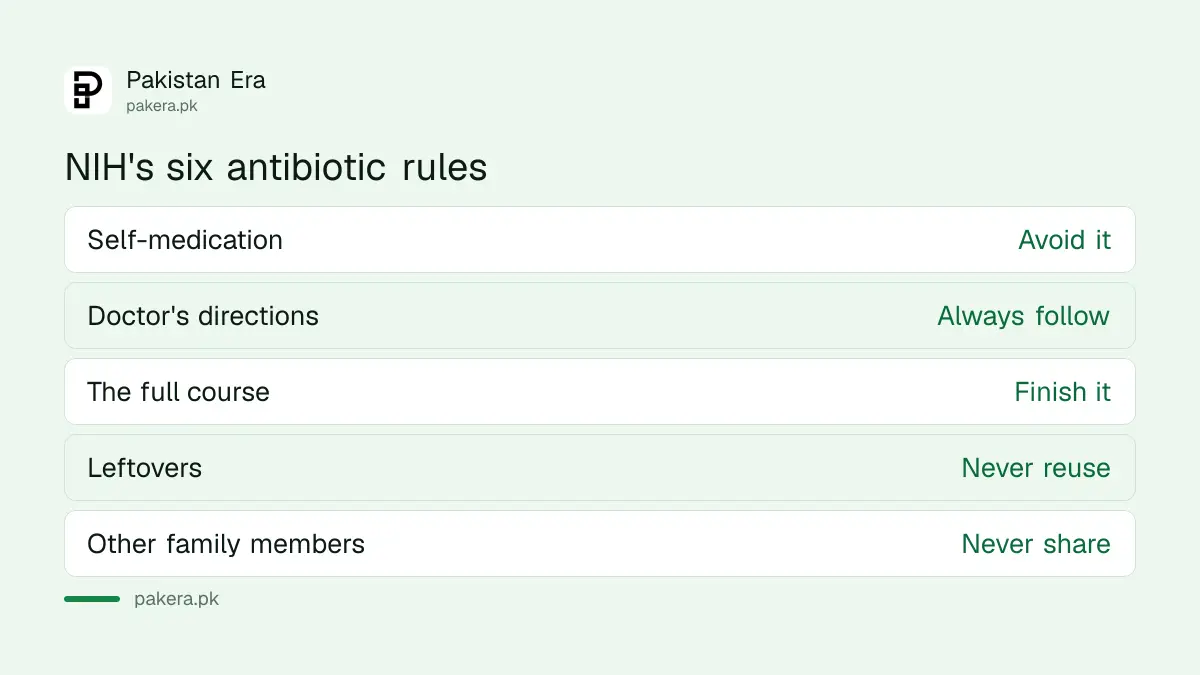
The poster's rules are simple. It puts self-medication first, with a cross over a tablet. Then come doctor's instructions, the full course, no reuse, no sharing and hand washing. Each one targets a habit that feeds resistance.
| NIH rule | What it means in practice |
|---|---|
| Avoid self-medication | Do not buy antibiotics on your own or on a friend's advice |
| Use as your doctor directs | Take the dose and timing your doctor wrote |
| Finish the course | Complete it even if you feel better |
| Do not reuse leftovers | Do not keep spare tablets for the next illness |
| Do not share | Antibiotics prescribed for one patient are for that patient only |
| Wash hands regularly | Fewer infections means fewer antibiotics needed |
The poster ends with one line to remember. It says that using antibiotics when they are not needed is a major reason resistance rises quickly, and a danger to us all.
Colds, flu and viral pink eye are not treated with antibiotics
Antibiotics act on bacteria, not viruses. NIH's cold and flu sheet lists no antibiotics for either illness. Its pink eye advisory says antibiotics are ineffective against viral conjunctivitis. So a cough with a runny nose is rarely a reason to start tablets on your own.
To see the difference between the two illnesses, read how to tell a cold from flu. For eyes, see what NIH says about pink eye and antibiotic drops.
A doctor may still prescribe an antibiotic when a bacterial infection is likely. In that case, follow the rules above. The point is that you should not be the one deciding.
Pakistan has had a national resistance plan since 2017
NIH's resistance page says Pakistan endorsed the global action plan in 2015. It then developed a National AMR Strategic Framework in 2016 and an operational National Action Plan in 2017. NIH is the national focal point, and it started a national surveillance system, PASS, in 2018.
NIH also says it has run WHO's GLASS reporting since 2016. In plain words, labs report how often germs resist drugs, so the country can see the trend. The page links a national surveillance report for 2021 to 2022.
Why finishing the course matters, in NIH's words
The poster is direct on this point. It says to complete the antibiotic course as the doctor instructs, and to do it even if you are feeling better. Feeling better does not mean every germ is gone.
The poster gives no medical reason beyond that, and we do not add one. The idea is simple. A course is set by a doctor for a purpose. Stopping early, or keeping spare tablets for later, breaks that plan, and NIH puts both on its list of things to avoid.
The same logic covers sharing. A tablet that suited one patient may not suit another, and the poster says the prescription is for that patient only.
Check the medicine you buy before you take it
Rules help only if the medicine is real. A fake or low-quality antibiotic can fail even when taken correctly. Our guide on how to check that a medicine is registered with DRAP shows the steps, and you can report a bad reaction through DRAP too.
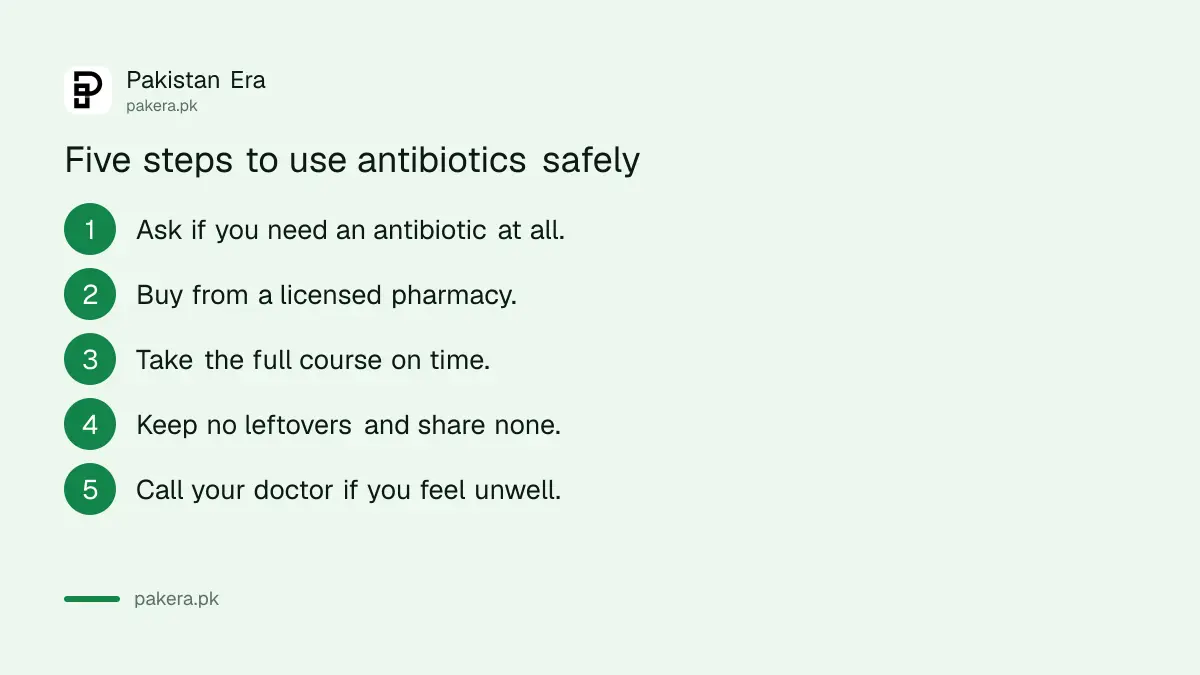
- Ask your doctor whether you need an antibiotic at all.
- Buy it from a licensed pharmacy, and keep the pack and receipt.
- Take the full course at the times written, even if you feel well.
- Keep no leftovers for later, and share none with family.
- If you feel unwell on the medicine, call your doctor and report the problem.
Common questions about antibiotics in Pakistan
Should I stop antibiotics when I feel better?
No. NIH's poster says to complete the course as your doctor directs, even if you feel better.
Can I keep leftover antibiotics for next time?
No. NIH says not to use leftover antibiotics again after a course.
Can I give my antibiotics to a family member?
No. NIH says antibiotics prescribed by a doctor are for that patient only, not for others at home.
Do antibiotics cure a cold or flu?
No. NIH's cold and flu sheet lists no antibiotics, because those illnesses are caused by viruses.
Who do I call at NIH about this poster?
The poster prints a phone number for NIH's Field Epidemiology and Disease Surveillance Division: 051-9255237. It is on an older poster, so confirm it before you rely on it.
How we verified this
What we checked, where we read it, and what we could not confirm.
Last checked 14 October 2026. The six rules come from NIH's antibiotic resistance poster, which has no date. The national plan details come from NIH's antimicrobial resistance page. The global figures come from the WHO fact sheet. We did not find a Pakistan-specific resistance rate on the pages we read.
About the author

Public Services and Education Journalist
Fajr Riaz is a journalist and content writer at Pakistan Era, based in Lahore. She covers the questions people meet in everyday life in Pakistan: how a public service works, what a change in the rules means, and where to find a reliable answer.