Which Platforms Pay Creators in Pakistan: YouTube Yes, Facebook Not Listed
YouTube pays Pakistani creators through AdSense. Facebook's Content Monetization list leaves Pakistan out, and X ended revenue sharing.
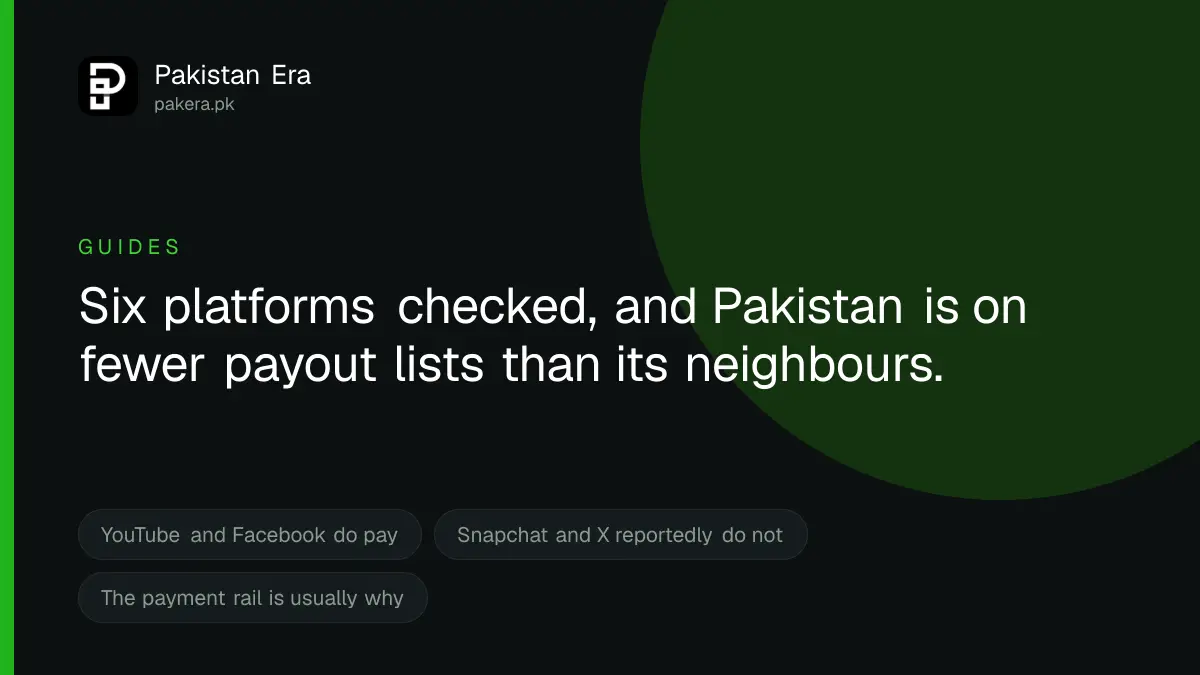
From Pakistan, YouTube is the one big platform that clearly pays creators, through the YouTube Partner Program and AdSense. Facebook's Content Monetization does not list Pakistan, X ended its old revenue sharing on 7 September 2026, and TikTok and Snapchat view rewards are reported to exclude Pakistan. Brand deals, client work and your own products pay on every platform.
The third column says how firm each answer is.
Where each platform stands
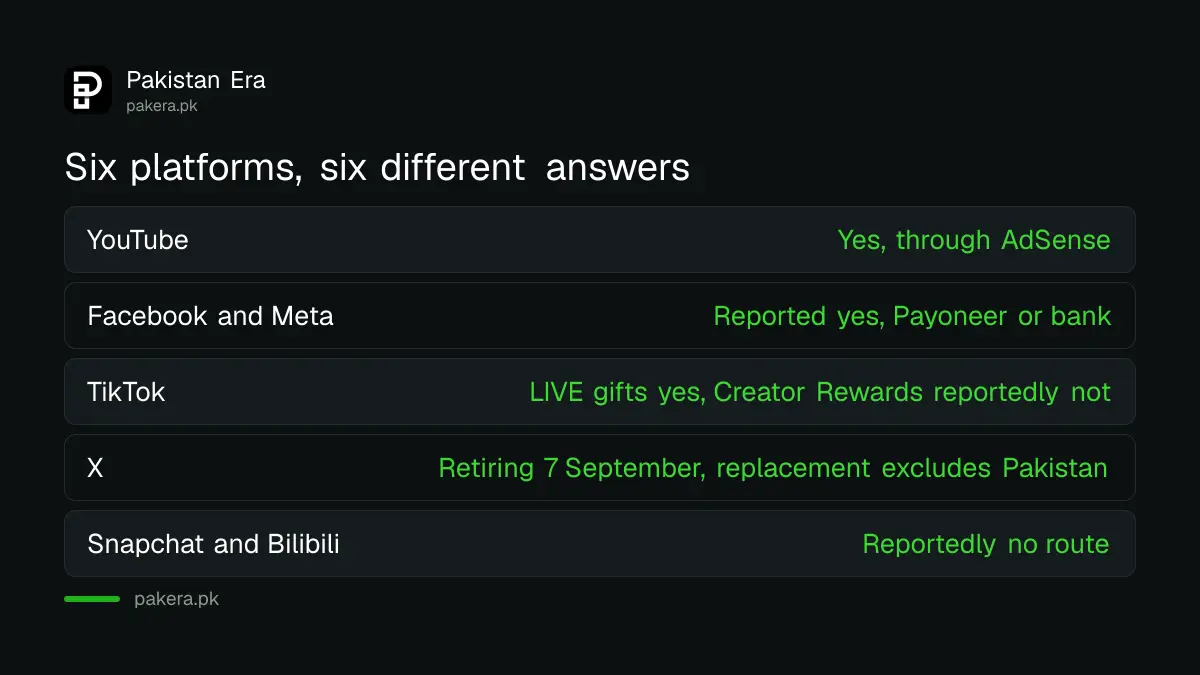
| Platform | Pays into Pakistan? | How sure we are |
|---|---|---|
| YouTube | Yes, through the Partner Program and AdSense | Requirements read on YouTube Help |
| Content Monetization: Pakistan not on the country list | List read on Meta's help page, 8 November | |
| TikTok | LIVE gifts reported yes, Creator Rewards reportedly not | Reports differ |
| X | Creator Revenue Sharing retired 7 September 2026 | Date read on X's own page in August |
| Snapchat | Reportedly not on the Spotlight list | Reports only |
| Bilibili | No published payout route | Checked, nothing published |
Each platform has its own page with the detail. See YouTube monetization requirements in Pakistan, Facebook Content Monetization in Pakistan, what TikTok pays in Pakistan and the end of X Creator Revenue Sharing.
YouTube: the clear route
YouTube Help lists two ways into the Partner Program: 1,000 subscribers with 4,000 valid public watch hours in the last 12 months, or 1,000 subscribers with 10 million valid Shorts views in the last 90 days. You also need a linked AdSense account and 2-Step Verification.
The limit in Pakistan is not eligibility but rate. What you earn follows where your viewers are, which we explain in what YouTube pays in Pakistan. Getting the money out has its own steps, in our AdSense payment guide.
Facebook: Pakistan is not on the list
Meta's help page "Content Monetization ads are available in these countries" lists about 70 countries on 8 November 2026. India, Bangladesh, Nepal and Sri Lanka are on it. Pakistan is not. Urdu does appear in the language list, which shows the gap is about the country, not the language.
Absence from a list is not a ban, and lists change. But do not build a plan on Facebook ad payouts until Pakistan appears there. Our Facebook guide explains which older Facebook programmes have ended.
The reason is the payment rail, not your content
Creators often assume exclusion is a judgement about Pakistani content. Reporting on the X change points somewhere duller: X pays through Stripe, and a creator must live in a country Stripe supports for payouts. Where payment coverage stops, the programme stops.
That explains why unrelated companies exclude the same countries. It also means an exclusion can lift with no announcement about Pakistan. Snapchat's Spotlight list is reported to include India, Indonesia, Nigeria, the Philippines, Egypt, Jordan and Morocco, but not Pakistan.
What to do with this
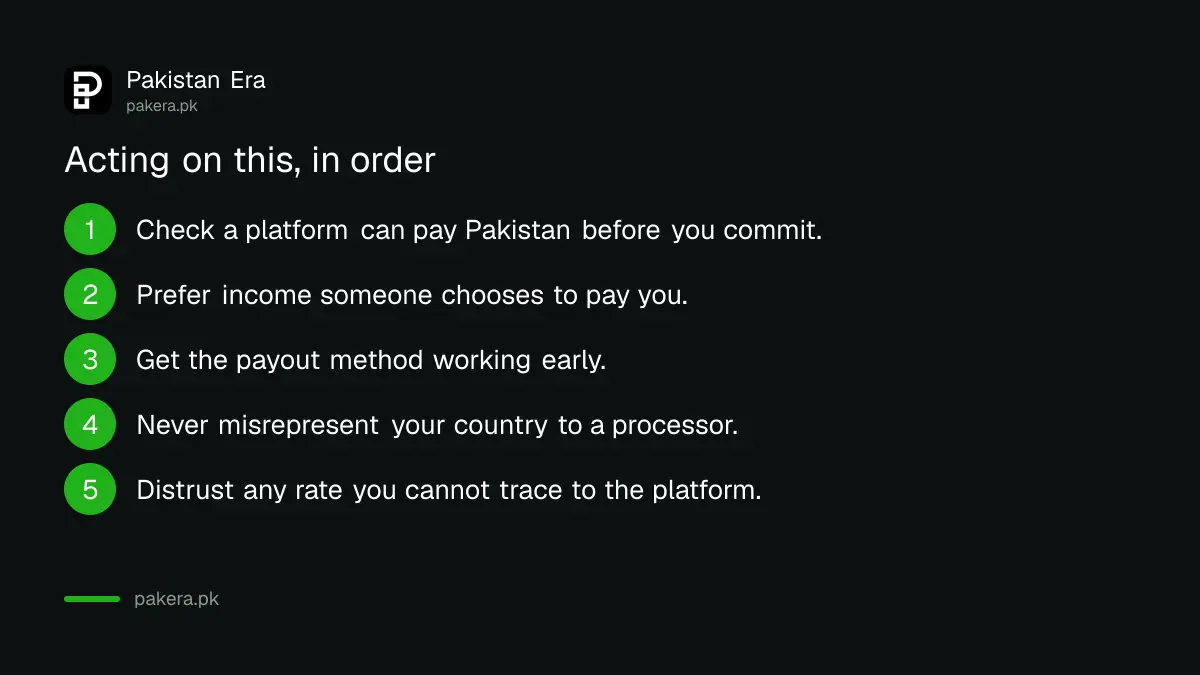
- Check a platform pays into Pakistan before you build a year of work on it.
- Prefer income somebody chooses to pay you over income a programme might allow.
- Get your payout method working early, not when the first payment is due.
- Never misrepresent your country to a payment processor, whatever anyone offers.
- Treat any per view rate you cannot trace to the platform as decoration.
The second point changes outcomes most. Brand deals, client work and selling your own product pay from Pakistan today, on every platform, because a person or company decided to pay you.
A worked example: a creator with 1,000 subscribers and 10 million Shorts views in the last 90 days already meets one of YouTube's two Partner Program routes, and can earn through AdSense. The same creator posting on Facebook cannot join Content Monetization from Pakistan today, so on Facebook the money comes from brand deals instead.
Be careful with apps that promise to pay you for watching or liking videos. Our guide to whether online earning apps in Pakistan pay sets out the checks. If you sell your videos, music or designs, our guide to copyright registration in Pakistan covers the official record of ownership.
Sort the money route and the tax once
Whichever platform you choose, set up a payout method that works from Pakistan, and keep the name on your platform account and bank account the same. Our guide to freelancer payments in Pakistan covers the routes, and it applies to creator income too.
Creator income is taxable. Our guide to declaring YouTube and TikTok income in your tax return covers how to report it.
Common questions about creator payouts in Pakistan
Which platform pays Pakistani creators?
YouTube, through the Partner Program and AdSense. Facebook's Content Monetization did not list Pakistan on 8 November 2026.
Is Facebook monetization available in Pakistan?
Meta's country list for Content Monetization ads does not include Pakistan. India, Bangladesh, Nepal and Sri Lanka are on it.
Why is Pakistan excluded so often?
Reporting points at payment processing coverage, not anything about Pakistani creators or content.
Can I use a VPN or a foreign account?
Misrepresenting your location to a payment processor is what gets earnings frozen and accounts closed, usually after enough has built up to hurt.
What always works?
Money paid directly by a person or company. Brand deals, client work and your own products do not depend on any eligibility list.
How we verified this
What we checked and where we read it.
We checked each platform's own help pages on 8 November 2026.
Last checked 8 November 2026. That day we read Meta's Content Monetization country and language list and YouTube Partner Program overview and eligibility. The 7 September 2026 retirement date was read on X's own Creator Revenue Sharing page on 27 August 2026. Your own account is the authority on your eligibility.
About the author
Public Services and Education Journalist
Fajr Riaz is a journalist and content writer at Pakistan Era, based in Lahore. She covers the questions people meet in everyday life in Pakistan: how a public service works, what a change in the rules means, and where to find a reliable answer.