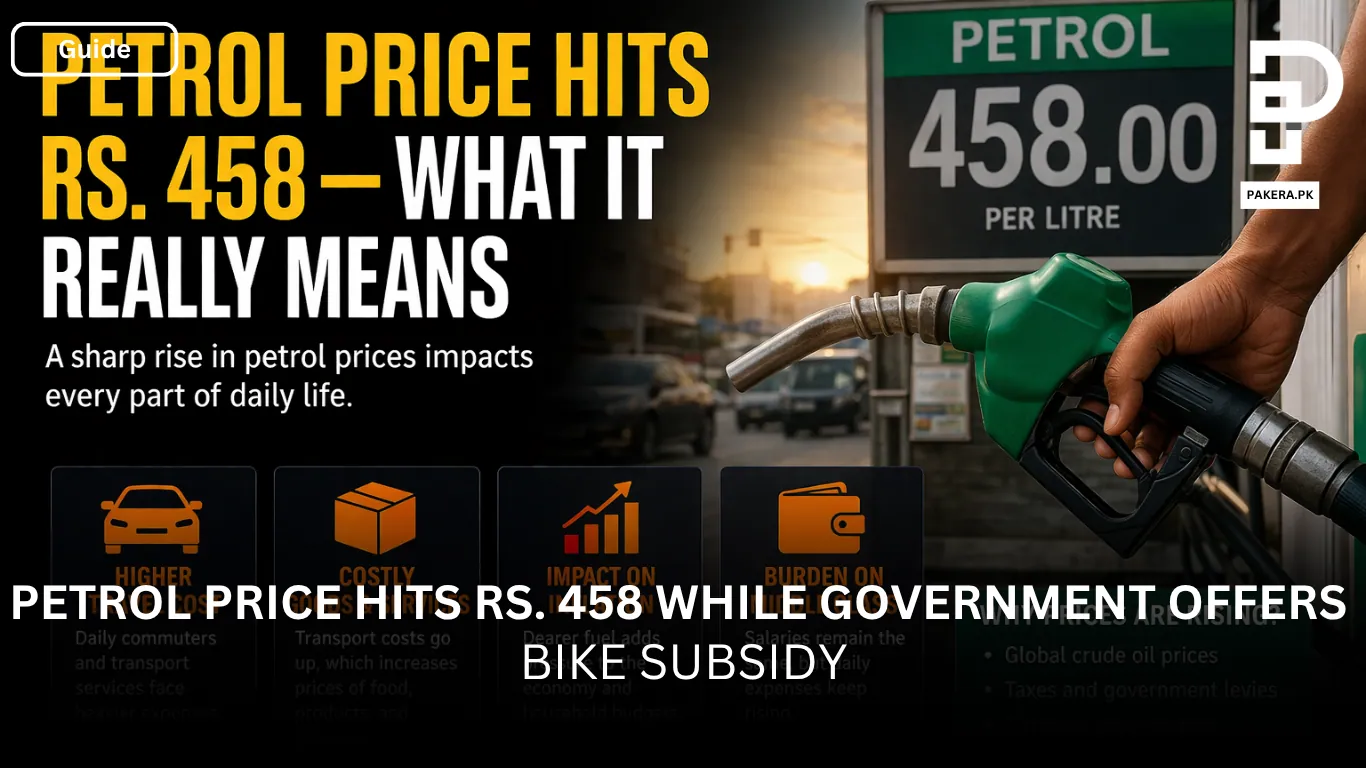
The Government of Pakistan has once again increased fuel prices, and this time the jump is massive. Petrol has gone from Rs. 321 per litre to Rs. 458 per litre, which is an increase of Rs. 137.24 per litre. Diesel prices have also seen a sharp rise, moving from Rs. 336 to Rs. 520 per litre, adding Rs. 184.49 per litre.
This sudden increase has shocked everyone, especially the middle and lower-income groups who are already struggling with daily expenses. The main reason behind this hike is the ongoing geopolitical tension, particularly the blockage of the Strait of Hormuz due to conflict involving Iran and the United States. Since Pakistan relies heavily on imported fuel, any disruption in global supply directly hits local prices.
At the same time, the government is trying to manage the situation by offering targeted subsidies, mainly for motorcyclists and essential sectors, to reduce the overall burden.
Why Petrol Prices Increased So Drastically
The biggest factor behind this increase is the disruption in global oil supply. The Strait of Hormuz is one of the most important routes for oil transportation worldwide. With it being blocked due to ongoing conflict, oil supply chains have been disturbed.
Pakistan does not produce enough oil locally, so it depends on imports. When supply becomes limited and demand remains high, prices automatically rise. This is exactly what we are seeing right now.
The increase is not just a local decision but a reflection of global market pressure.
Government Subsidy for Motorcyclists
To provide some relief, the government has introduced a subsidy specifically for motorcyclists, who make up a large portion of daily commuters in Pakistan.
Motorcyclists will receive a subsidy of Rs. 100 per litre on petrol. However, this subsidy is limited to 20 litres per month.
How Much Relief Does This Actually Give?
With petrol priced at Rs. 458 per litre, the Rs. 100 subsidy effectively brings the cost down to Rs. 358 per litre for eligible users.
This means:
- Maximum monthly subsidy: Rs. 2,000
- Applicable limit: 20 litres per month
While this does not completely offset the price hike, it still provides some level of support for those who rely on bikes for daily travel.
Subsidy for Public Transport and Diesel Users
The government is not only focusing on motorcyclists but also on public transport operators. Inter-city transport services will receive a Rs. 100 per litre subsidy on diesel.
This move is aimed at keeping ticket fares stable so that the general public does not face an additional burden in travel costs.
If transport fares were to increase alongside fuel prices, it would create a ripple effect across the economy.
Support for Farmers and Food Supply Chain
Farmers are also included in the subsidy plan. Since agriculture heavily depends on diesel-powered machinery, rising fuel prices directly impact food production costs.
To avoid a spike in food prices, the government is extending fuel subsidies to farmers as well.
Support for Essential Goods Transport
The government is also targeting the logistics sector to control inflation in essential items.
- Trucks carrying essential food items will receive Rs. 70,000 per month
- Large goods transport vehicles will get Rs. 80,000 per month
- In-city public service vehicles will receive Rs. 100,000 per month
This support is designed to keep supply chains running smoothly and prevent unnecessary price hikes in daily-use items.
What This Means for the Common Citizen
Even with subsidies in place, the overall impact of such a large fuel price increase is significant. Transportation costs, food prices, and general living expenses are all likely to rise.
The subsidy helps, but it is limited and targeted. Most people will still feel the pressure, especially those who exceed the subsidy limits or rely on higher fuel consumption.
In simple terms, the government is trying to balance two things:
- Managing a global crisis
- Providing limited relief to the most affected groups
Frequently Asked Questions
The increase is mainly due to global supply disruptions caused by the blockage of the Strait of Hormuz during ongoing geopolitical tensions. Pakistan relies on imported fuel, so global issues directly affect local prices.
Motorcyclists are receiving Rs. 100 per litre subsidy on petrol, limited to 20 litres per month, which gives a maximum relief of Rs. 2,000.
After applying the subsidy, petrol costs around Rs. 358 per litre for eligible motorcyclists within the monthly limit.
Yes, public transport operators are receiving Rs. 100 per litre subsidy on diesel to help keep fares stable.
The government is supporting farmers and transporters with fuel subsidies and monthly financial assistance to ensure that essential goods remain affordable.
Conclusion
The fuel price increase to Rs. 458 per litre marks a difficult phase for the economy and the public. While the reasons are largely global and beyond direct control, the impact is very local and immediate.
The government’s subsidy plan offers some relief, especially for motorcyclists, farmers, and transport sectors. However, it is clear that this is only a partial solution. For the average citizen, managing expenses will become more challenging in the coming days.
The situation highlights how deeply global events can affect everyday life, and why energy dependency remains a critical issue for countries like Pakistan.

Ali Akhtar is a young and curious voice here at Pakistan Era. He is currently pursuing his A-Levels and has a growing interest in Pakistan’s changing industrial landscape and educational trends. Ali likes to write in a way that helps him explain and explore the world around him. His writing reflects the perspective of the new generation navigating the evolving trends of Pakistan where technology, youth innovation, and shifting opportunities are reshaping the country’s future.