Fertiliser Dose for Rainfed Wheat in Punjab: DAP, Urea and SOP Bags per Acre by Rainfall Zone
Punjab's Agriculture Department sets 1 to 1.5 bags each of DAP and urea per acre for rainfed wheat by rainfall zone. Find your district's dose and its cost.
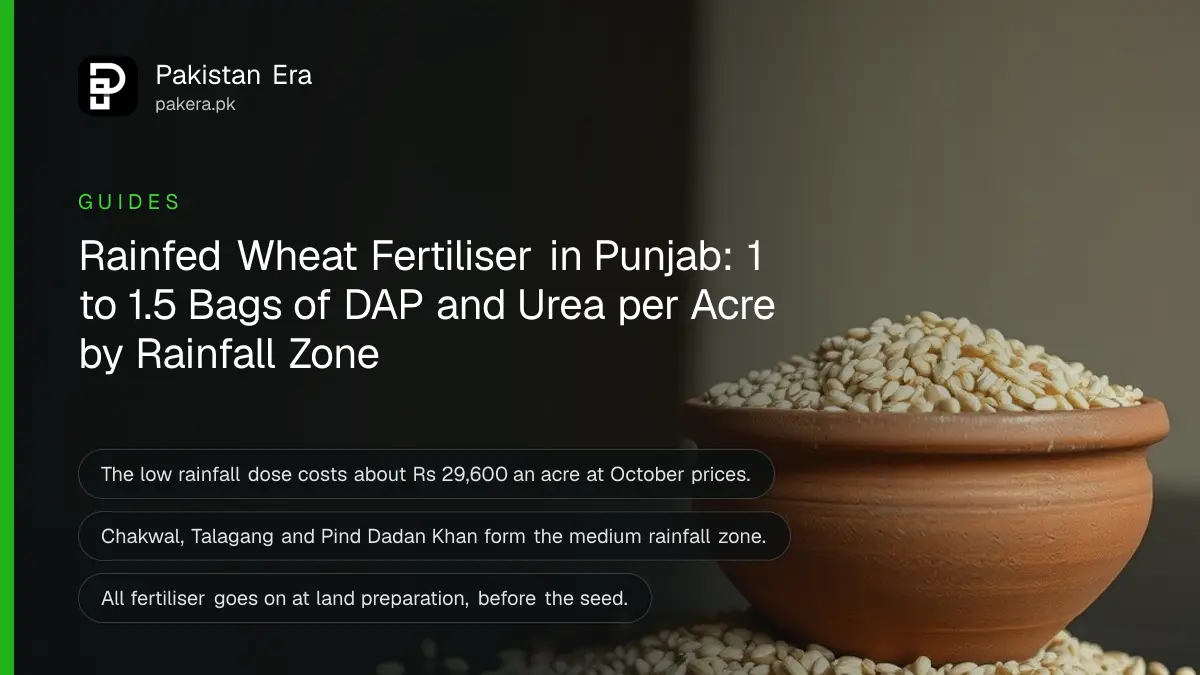
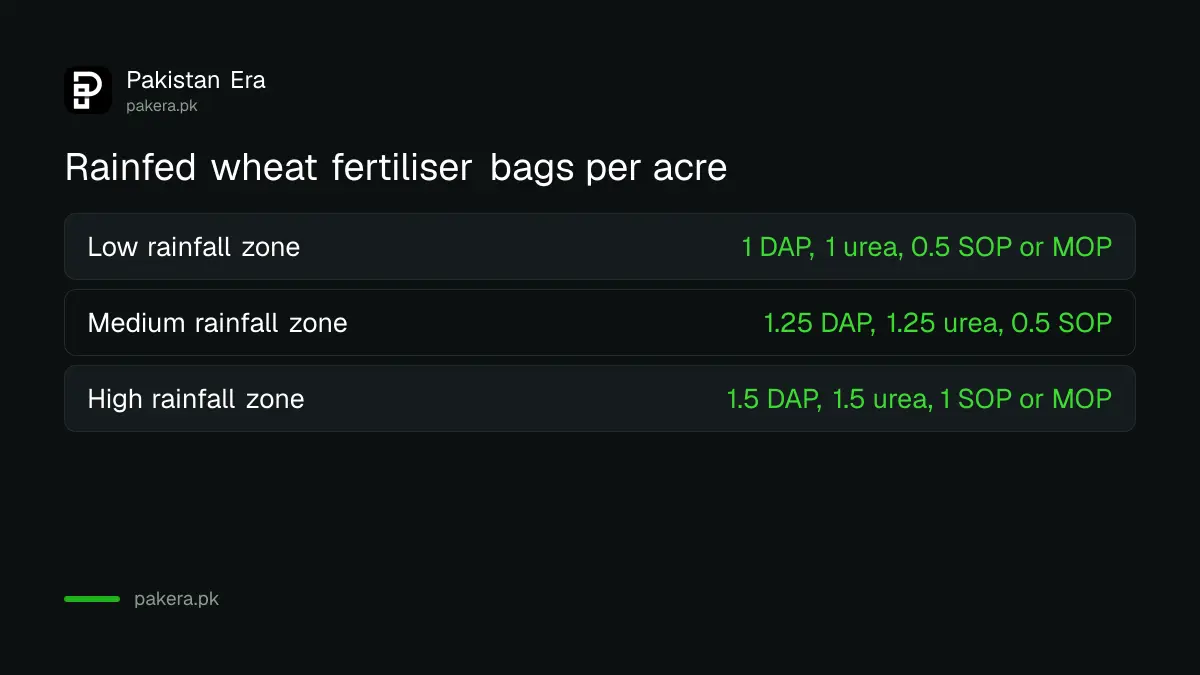
For rainfed wheat in Punjab, the Agriculture Department's 14 October 2026 advice is one bag of DAP, one bag of urea and half a bag of SOP or MOP per acre in the low rainfall districts, 1.25 bags each of DAP and urea plus half a bag of SOP in the medium rainfall tract, and 1.5 bags of DAP, 1.5 bags of urea and one bag of SOP or MOP in the high rainfall districts. All of it goes on at land preparation, before the seed.
We read the Urdu press release on the Agriculture Department Punjab's site on 19 October 2026. It names the districts in each zone, which matters more than the bag count, because a Chakwal farmer and a Bhakkar farmer get different advice. At October prices, the three doses cost roughly Rs 29,600, Rs 35,100 and Rs 48,300 an acre, by our arithmetic from the Pakistan Bureau of Statistics' 8 October averages.
The dose depends on which rainfall zone your district is in
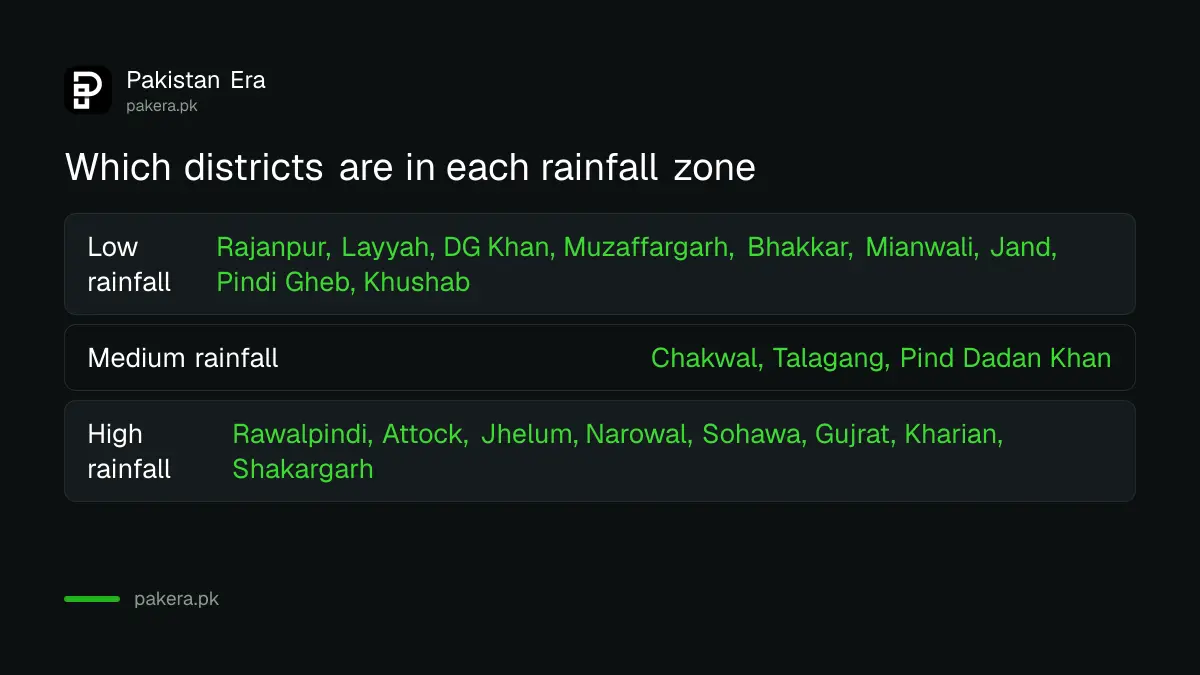
The department splits barani Punjab into three tracts by rainfall. Low rainfall means the dry west and south west. Medium means the Chakwal plateau. High means the wetter north east along the foothills. The release lists the districts by name, so find yours before you buy a single bag.
| Zone | Districts and areas named in the release | Bags per acre |
|---|---|---|
| Low rainfall | Rajanpur, Layyah, Dera Ghazi Khan, Muzaffargarh, Bhakkar, Mianwali, Jand, Pindi Gheb and the barani parts of Khushab | 1 DAP, 1 urea, 0.5 SOP or MOP |
| Medium rainfall | Chakwal, Talagang and Pind Dadan Khan | 1.25 DAP, 1.25 urea, 0.5 SOP |
| High rainfall | Rawalpindi, Attock, Jhelum, Narowal, Sohawa, Gujrat, Kharian and Shakargarh | 1.5 DAP, 1.5 urea, 1 SOP or MOP |
A bag here is the standard 50 kg sack. DAP supplies phosphorus and some nitrogen, urea supplies nitrogen, and SOP or MOP supplies potash. The release does not give the nutrient figures in kilograms; the department's wheat production plan does, and the matching bag counts there line up with these, as set out in the guide to wheat sowing in Punjab.
Everything goes on at land preparation, not at tillering
The release is blunt on timing. It says to use all fertilisers at the time of land preparation. That is different from irrigated wheat, where urea is usually split and part of it goes on with the first watering. On barani land there is no first watering to carry it down, so the department wants it in the soil before the seed.
The spokesman adds that fertiliser placed by drill at sowing works better than fertiliser broadcast on the surface. The reason given is simple: the drill drops it near the roots, so the crop can use every grain of it. Broadcast fertiliser on a dry surface waits for rain, and some of it is lost before the plant can reach it.
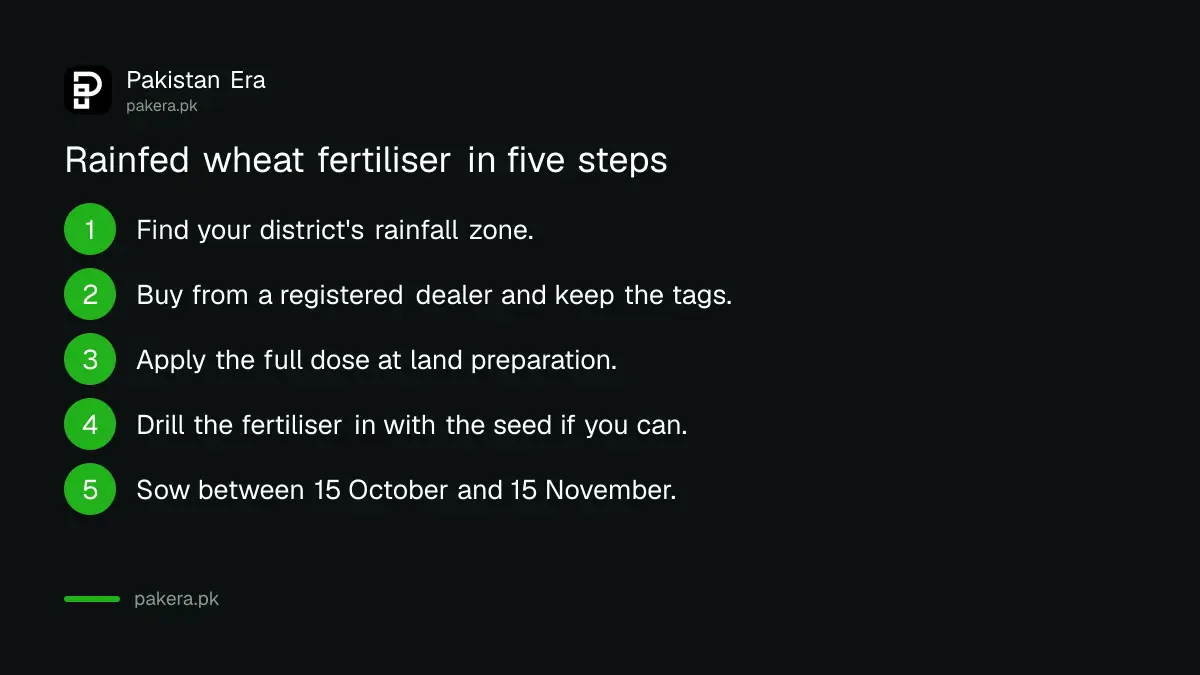
- Find your district in the table above and note the bag counts.
- Buy from a registered dealer and keep the receipt and the bag tags.
- Apply the full DAP, urea and SOP or MOP dose while preparing the land.
- If you own or can hire a drill, place the fertiliser with the seed at sowing.
- Sow inside the rainfed window of 15 October to 15 November.
The low rainfall dose costs about Rs 29,600 an acre at October prices
The release gives bags, not rupees, so we priced the doses with the Pakistan Bureau of Statistics' weekly retail averages for the week ended 8 October 2026: DAP Rs 17,128, Sona urea Rs 4,780 and SOP Rs 15,422 for a 50 kg bag. MOP is not in the PBS table, so the SOP price is used where the release gives a choice.
| Zone | DAP | Urea | SOP | Total per acre |
|---|---|---|---|---|
| Low rainfall | Rs 17,128 | Rs 4,780 | Rs 7,711 | Rs 29,619 |
| Medium rainfall | Rs 21,410 | Rs 5,975 | Rs 7,711 | Rs 35,096 |
| High rainfall | Rs 25,692 | Rs 7,170 | Rs 15,422 | Rs 48,284 |
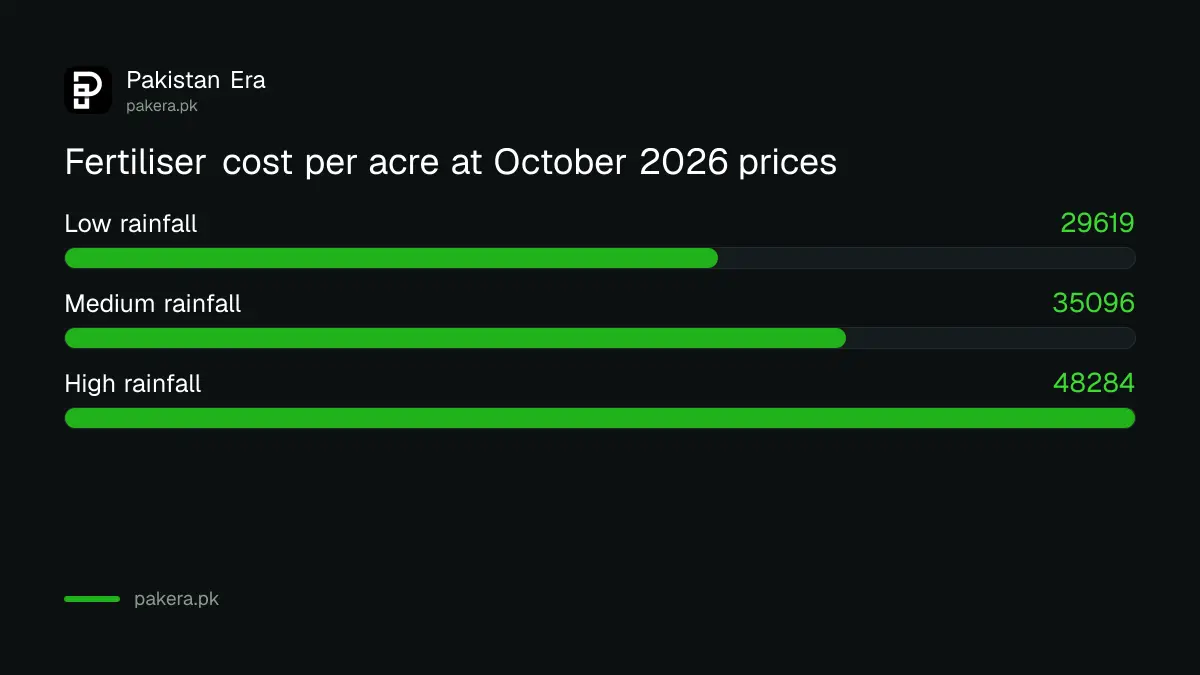
DAP is the bill. It is more than half the cost in every zone. The PBS average was up 19 per cent on a year earlier, as recorded in our report on the DAP and urea prices on 8 October. Prices differ by city and by dealer, so treat these totals as a budget, not a quote.
The Punjab Kissan Card lends up to Rs 30,000 an acre of interest-free input credit, capped at Rs 150,000 a season, which we read on the Punjab government's scheme page on 10 October. That just about covers the low rainfall dose and about 60 per cent of the high rainfall one. Where the card can be used is in the list of registered Kissan Card dealers in Punjab, and the repayment date for the current cycle is in the note on the Kissan Card bill due on 26 October.
Check the bag before you pay
A wheat crop on rainfed land gets one chance at fertiliser, so a fake or underweight bag costs the whole season. Check the company seal and the printed weight, and buy from a dealer whose licence you have seen. If the bag looks wrong, the steps to report fake fertiliser in Punjab include a helpline and a lab test.
Soil testing is cheap compared with a wrong dose. The department's own labs test soil and fertiliser samples, and the fees and addresses are in the guide to getting fertiliser and seed tested at a Punjab government lab. A soil test can tell you to drop the potash bag, or add one, and either way it pays for itself.
Rain, not the calendar, decides the sowing day
Rainfed sowing in Punjab runs from 15 October to 15 November under the department's production plan, and it can start earlier if the soil holds moisture. The fertiliser advice assumes you sow into moist soil. If the top layer is dry when you prepare the land, the DAP and urea sit there until the next rain, and seed sown dry may not come up evenly.
The Pakistan Meteorological Department's weekly outlook on 18 October 2026 expected mainly dry weather across most of the country until 24 October, with only isolated rain in the north. Farmers in the medium and high rainfall tracts who still have moisture from the 10 to 15 October rains have a window now. The free tehsil-level advisories from PMD's Agromet centre are the place to watch for the next wet spell.
Common questions
How much DAP and urea does rainfed wheat need per acre in Punjab?
One bag each in the low rainfall districts, 1.25 bags each in Chakwal, Talagang and Pind Dadan Khan, and 1.5 bags each in the high rainfall districts, per the department's 14 October 2026 release.
When should the fertiliser be applied on barani land?
All of it at land preparation, before sowing. The release says drilling it in at sowing makes it work better.
Which zone is Chakwal in?
Medium rainfall, with Talagang and Pind Dadan Khan. The dose there is 1.25 bags of DAP, 1.25 of urea and half a bag of SOP.
Can I use MOP instead of SOP?
The release allows SOP or MOP in the low and high rainfall zones. For the medium zone it names SOP only.
What does the dose cost?
About Rs 29,600, Rs 35,100 and Rs 48,300 an acre for the low, medium and high zones at the PBS averages for 8 October 2026. Your dealer's price will differ.
Does the Kissan Card cover it?
The card lends up to Rs 30,000 an acre, interest free, for inputs. That covers the low rainfall dose and part of the others.
How we verified this
What we checked, where we read it, and what we could not confirm.
Last checked 19 October 2026. The zones, district names, bag counts, the instruction to apply at land preparation and the drill advice come from the Agriculture Department Punjab's Urdu press release dated Lahore, 14 October 2026, on its press releases page, which we read on 19 October 2026. Fertiliser prices are the PBS weekly SPI averages for the week ended 8 October 2026, and the per-acre totals are our arithmetic. The Kissan Card limits are from the Punjab government's scheme page, read on 10 October. The sowing window is from the department's wheat production plan. The dry outlook is from the PMD weekly outlook issued 18 October 2026. We could not verify a retail price for MOP, and the department's 12 October release on barani sowing is a scanned image we could not read.
About the author

Senior Writer, Public Services and Technology
Shahid joined us in 2024 as an author. He is a senior contributor to Pakistan's leading technology websites. He writes detailed articles, mostly covering his expertise in the latest tech, mobiles, apps, gadgets, and step-by-step guides. His ideology is to help people understand the latest trends and explain complex methods through very easy-to-understand guides.