Check Cooking Oil, Atta, Honey and Milk for a PSQCA Licence in Pakistan
PSQCA lists 46 food items as compulsory, from cooking oil and atta to honey and packaged milk. Check a brand's licence before you buy in bulk. See the steps.
Short answer: PSQCA's compulsory items page lists 46 food items, including cooking oil, banaspati, fortified atta, sugar, iodised salt, honey, milk powder and packaged milk. Search the brand on PSQCA's free licence tool at icq.psqca.com.pk before you stock up.
The shelf in a Pakistani kitchen is a list of daily gambles. Is the oil what the tin says? Is the honey honey? Most families cannot test any of it, so they trust the label and the shop.
We read PSQCA's compulsory items page on 14 October 2026. This guide covers the staple foods on it. We did not search any brand's licence today, so we do not say which brands hold one. A licence is not a lab test of the packet in your hand.
PSQCA lists 46 food items, including kitchen staples
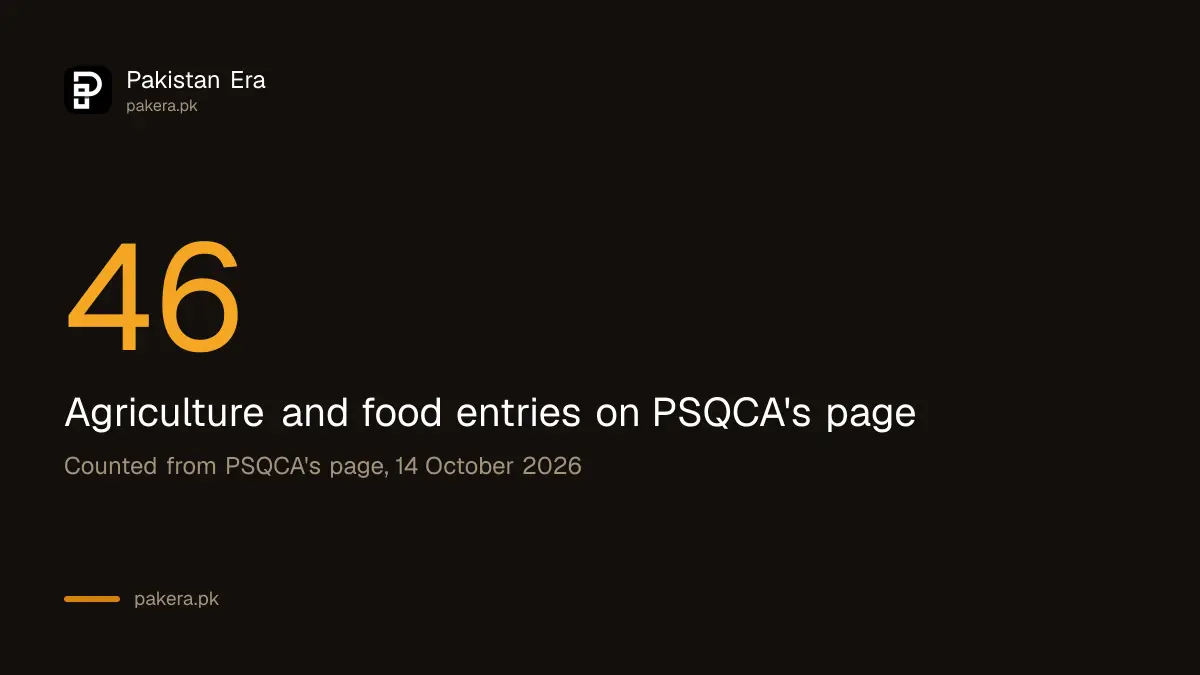
The agriculture and food group on PSQCA's page has 46 entries. They include cooking oils, banaspati, margarine, fortified wheat flour, refined sugar, iodised salt, honey, milk powder, packaged liquid milk, tea and ground spices such as turmeric and chilli powder.
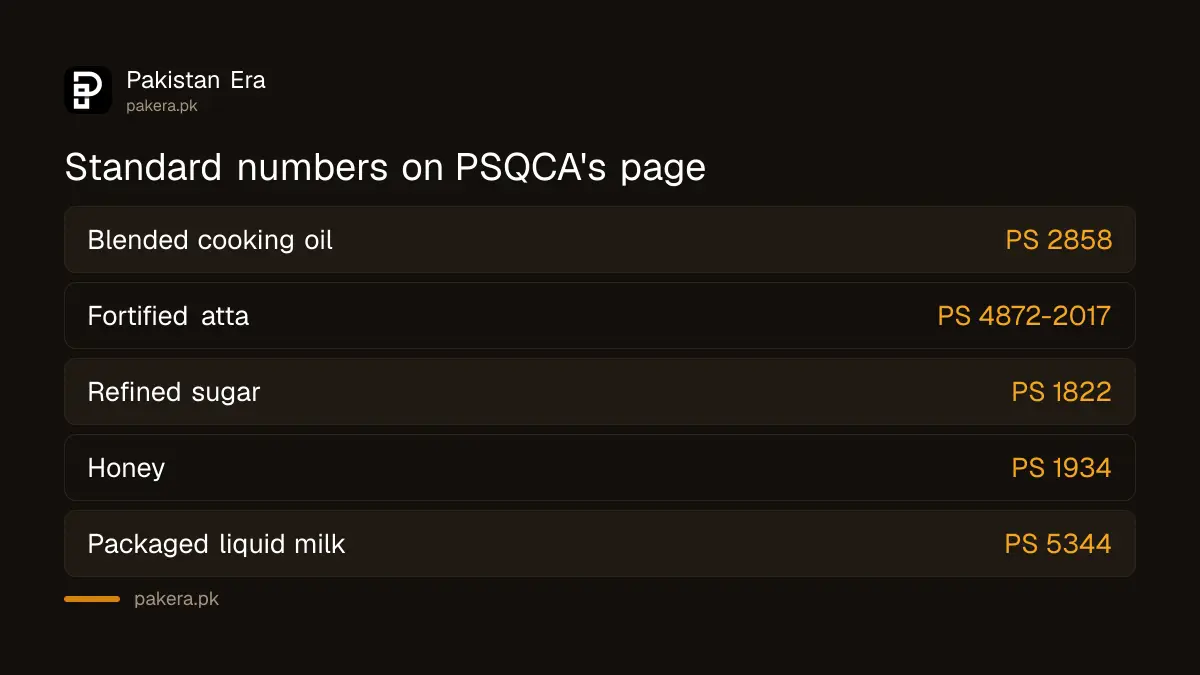
| Food | Standard on PSQCA's page |
|---|---|
| Cooking oil, blended | PS 2858 |
| Banaspati | PS 221 |
| Fortified wheat flour (atta) | PS 4872-2017 |
| Refined sugar and white sugar | PS 1822 |
| Iodised salt | PS 1669 |
| Honey | PS 1934 |
| Packaged liquid milk | PS 5344 |
The numbers are copied as published. The page also lists milk powder, condensed milk, butter, mayonnaise, pickles and jam, each with its own standard.
A licence is a starting point for oil and milk
A PSQCA licence says the maker passed the standard for that product. It does not say that every packet on every shop shelf is clean. Treat the licence as one check, then look at the pack, the seal, the dates and the shop.
For what actual lab tests found in ghee, oil and milk samples, read our note on quality tests of packaged ghee, oil and milk. For milk you doubt, the Punjab Food Authority offers testing, and the details are in how to get food tested at a Punjab Food Authority lab.
Price is a clue as well. If the shop's oil is far cheaper than the weekly price sheet, ask why. See where prices stand in ghee and cooking oil prices on PBS's weekly sheet.
Four steps check a food brand's licence
Note the brand and the maker's name on the pack. Open PSQCA's licence tool, pick the product or type the maker, and read the status and valid up to columns. A Valid status and a future date are what you want. It needs no login.
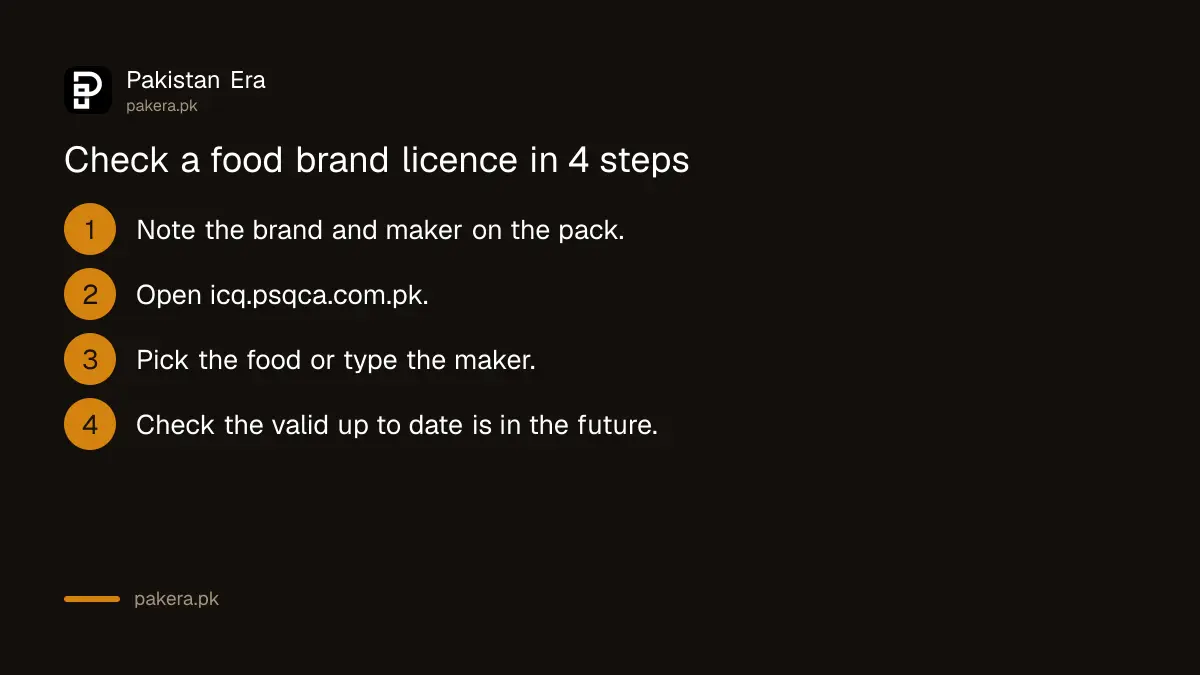
- Note the brand and the maker's name printed on the pack.
- Open the CM License Verification page at icq.psqca.com.pk on your phone.
- Pick the food from the list, or type the maker's name, and search.
- Check the brand matches your pack and the valid up to date is in the future.
When we searched gas appliances on this tool on 2 October 2026, all records showed expired while some cable licences were valid. The tool can lag, so one blank result is a reason to ask the shop, not proof that the food is unsafe. The result is in our guide to checking a PSQCA licence.
Read the pack, the seal and the price
Check the batch number, the manufacture and expiry dates, an intact seal, and the maker's address. Smell and look at oil and honey before you open a second tin. Keep the receipt so you can return a bad packet.
If a shop charges more than the displayed price or the pack weighs light, the steps are in how to report a tampered scale or wrong price tag and how to report overcharging in Punjab.
For flour and sugar you buy in larger quantities, compare prices across cities in rice, pulses, milk and sugar prices by city. A slightly dearer brand with a valid licence beats a cheap sack of unknown origin.
Buying in bulk raises the stakes. A twenty kilogram sack or a case of tins is a bigger loss than a single packet. Open one unit in the shop if the seller allows it, smell it, and look at the colour. Buy a small amount first from a new brand, use it for a week, and only then order the larger quantity.
Loose items are the hardest to judge. Honey from an unlabelled jar and oil poured from a drum carry no licence, no date and no batch number. If you must buy loose, buy from a shop you trust and that sells fast, and keep the first purchase small.
Common questions
Is cooking oil on the PSQCA compulsory list?
Yes. PSQCA lists several oils, including blended cooking oil (PS 2858) and banaspati (PS 221). Ask for the maker's licence number.
Is atta covered?
Yes. PSQCA lists fortified wheat flour (atta) under PS 4872-2017.
Is honey on the list?
Yes. PSQCA lists honey under PS 1934. A licence does not prove a particular jar is pure, so look at the seal and the maker.
Does a licence mean the packet is safe?
No. It means the maker met a standard. Check the seal, dates and storage, and use a lab test if you doubt a batch.
Can I check a licence on my phone?
Yes. The PSQCA licence page works in a phone browser and needs no login.
How we verified this
What we checked, where we read it, and what we could not confirm.
Last checked on 14 October 2026, Pakistan time. We read PSQCA's list of compulsory items and the CM License Verification page. We could not read PSQCA's complaint pages. We did not search any brand licence today and we did not test any food.
About the author

Senior Writer, Public Services and Technology
Shahid joined us in 2024 as an author. He is a senior contributor to Pakistan's leading technology websites. He writes detailed articles, mostly covering his expertise in the latest tech, mobiles, apps, gadgets, and step-by-step guides. His ideology is to help people understand the latest trends and explain complex methods through very easy-to-understand guides.