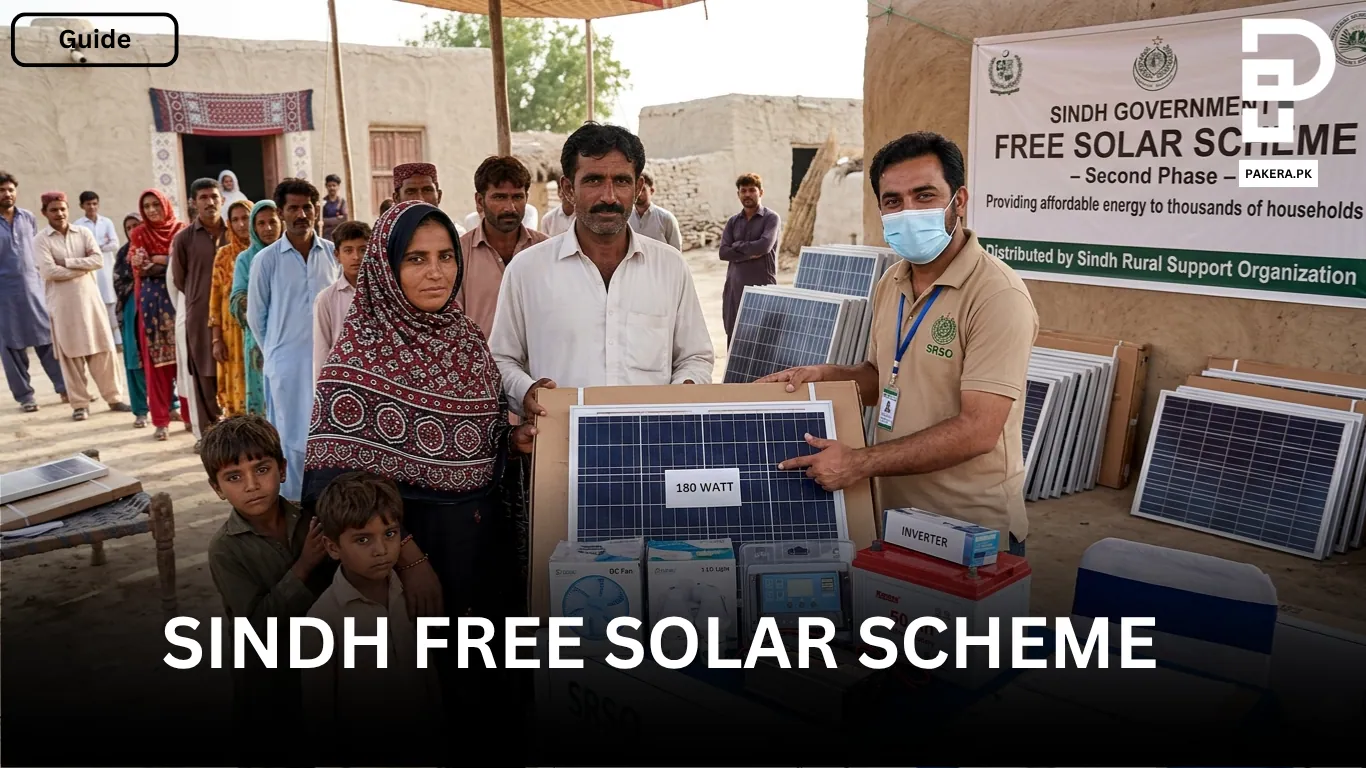
Electricity costs have been rising for a long time, and for many low-income families, it has become difficult to manage basic energy needs. In response to this, Sindh has taken a practical step by launching a free solar scheme aimed at helping households reduce their dependency on expensive electricity.
This initiative is not just an announcement on paper. It is already being implemented, starting from selected districts and gradually expanding across the province. The idea is simple: provide basic solar systems to families who need them the most, so they can at least cover their essential daily usage without worrying about bills.
Expansion of the Free Solar Program in Sindh
Sindh has officially moved into the second phase of its free solar system program. Under this phase, around 275,000 households across the province will receive solar kits. This is a significant increase compared to the initial rollout and shows that the government is serious about scaling the project.
The scheme was inaugurated in Qambar Shahdadkot, where solar kits were distributed among deserving families. The program reflects a broader vision of shifting towards solar energy, especially in areas where electricity supply is either unreliable or too expensive.
In the first phase, the program started on a much smaller scale, with around 100 families receiving solar systems. However, even at that stage, around 247 households had already been verified in the district, indicating strong demand and need.
On-Grid and Off-Grid Distribution
One of the key aspects of this scheme is how the solar systems are being distributed. The program includes both on-grid and off-grid systems to cater to different types of households.
Around 132,000 systems are off-grid, which means they are designed for areas where there is little to no access to electricity. These systems allow families to become independent from the traditional power supply.
On the other hand, about 143,000 systems are on-grid, which can work alongside existing electricity connections. This helps reduce overall electricity usage and lowers monthly bills.
The distribution process is being managed by the Sindh Rural Support Organization, ensuring that the systems reach the right people in a structured and organized way.
What’s Included in the Solar Kit?
Each solar kit provided under this scheme is designed to meet basic household needs. It is not meant to run heavy appliances, but it covers essential daily usage comfortably.
Key Components of the Kit
Each household receives:
- A 180-watt solar panel
- A DC fan
- Three LED lights
- A charge controller
- Mobile charging facility
- A 50 Ah lithium battery
- An inverter
This setup is enough to provide lighting, airflow, and basic charging needs, which can make a big difference in daily life, especially in rural and low-income areas.
Why This Scheme Matters
This initiative comes at a time when inflation and energy costs are putting pressure on households. By providing free solar systems, the government is offering a long-term solution instead of temporary relief.
It also promotes the use of renewable energy, which is important for sustainability. Instead of relying completely on traditional electricity, families can now generate their own power for basic needs.
For many households, this is not just about saving money. It is about having reliable access to light and electricity, which directly impacts daily routines, education, and overall quality of life.
Frequently Asked Questions
The scheme is mainly targeted at low-income and deserving households, especially in rural and underserved areas. Verification is done before distribution to ensure the right families benefit.
In the second phase alone, around 275,000 households across Sindh will receive solar kits.
Off-grid systems work independently without any connection to the main electricity supply, while on-grid systems are connected to the existing grid and help reduce electricity usage.
No, the provided kit is designed for basic usage like lights, fans, and mobile charging. It is not suitable for running heavy appliances like refrigerators or air conditioners.
The Sindh Rural Support Organization is handling the distribution process to ensure proper delivery and transparency.
Conclusion
Sindh’s free solar scheme is a practical move toward solving real energy problems faced by low-income families. Instead of short-term fixes, it offers a sustainable way to reduce electricity costs and improve access to basic power.
While the program is still expanding, its impact is already visible. If implemented properly on a larger scale, it has the potential to change how energy is used in many parts of the province, especially where it is needed the most.