When a Google core update rolls out, it can feel like everything suddenly changes overnight. One day your traffic is stable, and the next, you’re staring at a drop that doesn’t quite make sense. It’s easy to panic, but Google has been clear about one thing: reacting too quickly is often the wrong move.
Instead of rushing into fixes, the smarter approach is to step back and evaluate what actually happened. Core updates are not penalties—they are adjustments in how Google evaluates content. That means recovery isn’t about quick tricks, but about understanding the data and improving your site in a meaningful way.
Understanding the Real Impact of a Core Update
Before doing anything else, it’s important to confirm whether what you’re seeing is truly related to the update.
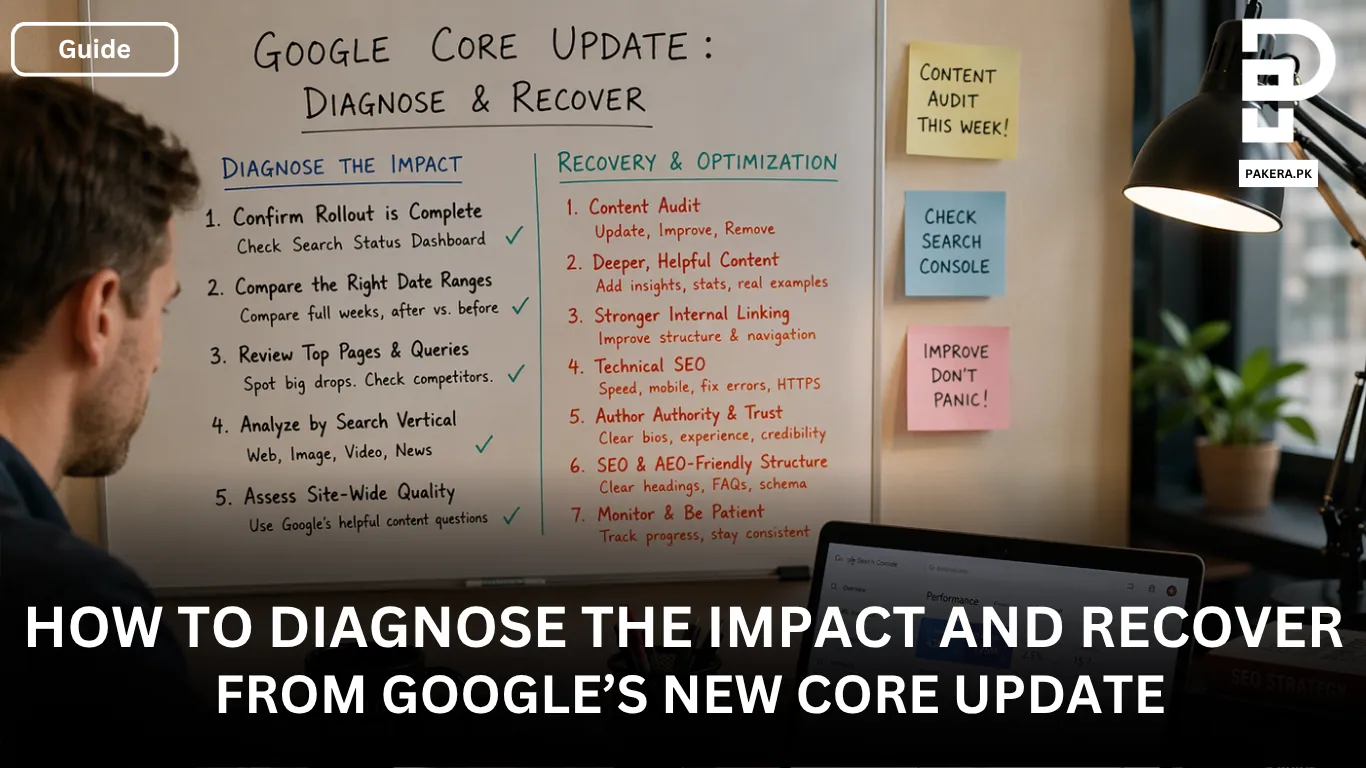
Confirm the Update Has Fully Rolled Out
Google usually releases updates over several days or even weeks. During this time, rankings can fluctuate a lot. If you start analyzing too early, you might misinterpret temporary changes as permanent losses.
The best approach is to wait until the rollout is complete and then give it at least a week. This gives the data time to settle so you’re working with a clearer picture.
Compare the Right Date Ranges
One of the most common mistakes is comparing random dates. Instead, compare a full week after the update with a similar week before it started.
This helps you separate real declines from normal daily fluctuations. Traffic naturally goes up and down, so without proper comparison, it’s easy to overestimate the impact.
Identify Which Pages and Queries Dropped
Not every ranking drop is equal. If a page falls from position #2 to #4, it’s usually not a big deal. But if it drops from #4 to #29, that’s something you need to investigate.
Focus on your top-performing pages and the queries that brought in the most traffic. Look at what changed and how competitors are now ranking above you.
Analyze by Search Type
Sometimes the drop isn’t across your entire site. It could be limited to a specific search vertical like:
- Web search
- Image search
- Video results
- News
Understanding where the decline happened gives you more direction on what to fix.
Evaluate Overall Site Quality
If the drop is significant and consistent, it’s time to look at your site as a whole.
This isn’t just about one page. It’s about how useful, reliable, and complete your content is. A good approach is to have someone review your site objectively using Google’s own guidelines for helpful content.
Recovery and Optimization Strategies That Actually Work
Once you understand the impact, the next step is improving your site in a way that aligns with what Google is looking for.
Perform a Comprehensive Content Audit
Start by identifying which pages lost traffic and which ones are no longer competitive.
Some content might be outdated, too thin, or simply not useful anymore. In those cases, it’s better to either improve, merge, or remove it entirely.
Look closely at competitor pages that replaced you in rankings. See what they’re doing better—more depth, better structure, fresher information—and use that insight to improve your own content.
Deepen Content Quality and Relevance
This is where most recoveries happen.
Instead of trying to target broad keywords, focus on answering specific questions in detail. Add real value through:
- Clear explanations
- Real-world examples
- Updated statistics
- Original insights
Each page should match a clear search intent. If someone lands on your page, they should feel like they got exactly what they were looking for.
Strengthen Internal Linking
Internal linking is often overlooked, but it plays a big role in how Google understands your site.
By linking related pages together, you help search engines see the connection between topics. At the same time, you make it easier for users to explore your content.
A strong internal structure improves navigation, reduces bounce rate, and distributes authority across your site.
Improve Technical SEO
Even the best content won’t perform well if your site is slow or difficult to use.
Make sure your pages load quickly, especially the main content. Optimize images, reduce unnecessary scripts, and enable caching where possible.
Fix broken links, remove duplicate content, and ensure your site is mobile-friendly. A clean and logical URL structure also makes a difference.
Technical health is the foundation. Without it, everything else struggles.
Build Author Authority and Trust
Google is placing more importance on who creates the content, not just the content itself.
Add detailed author bios with real credentials. Link to professional profiles and highlight any experience or expertise.
When readers see a real person behind the content with actual knowledge, it builds trust. That trust is exactly what Google wants to reward.
Use SEO and AEO-Friendly Structure
Content structure matters more than ever, especially with the rise of AI-driven search.
Use clear headings that reflect real questions people ask. Under each heading, provide direct and concise answers.
Structured data like FAQ, HowTo, and Article schema can help search engines better understand your content. It also increases your chances of being featured in rich results or AI summaries.
Monitor Progress Without Overreacting
Recovery doesn’t happen overnight.
Google has mentioned that improvements can take months to reflect in search results. That means constant monitoring is important, but overreacting to small fluctuations is not.
Focus on steady improvements. The goal isn’t quick wins it’s long-term stability.
Frequently Asked Questions
Recovery usually takes a few months. In some cases, improvements may only be fully recognized after the next core update.
Not necessarily. Focus on the pages that were most affected. Updating everything without a clear strategy can do more harm than good.
No. Technical SEO is important, but it won’t fix content quality issues. Both need to work together.
Core updates are not penalties. They simply reassess content based on new criteria. Sometimes competitors improve, and that alone can push your rankings down.
It depends. If the content has potential, improve it. If it adds no value, it’s better to remove or consolidate it.
Conclusion
Google core updates can be frustrating, especially when your traffic takes a hit without warning. But the key is not to react emotionally or rush into random fixes.
By taking a data-driven approach, understanding where the impact happened, and focusing on real improvements in content and user experience, recovery becomes much more achievable.
In the end, it’s not about chasing the algorithm. It’s about building a site that genuinely deserves to rank and that’s something that holds up across every update.